
Fluid IV for several days depletes magnesium, phosphate, potassium, Vitamin B1, etc.
Claude AI July 2026
Yes — several days of "just IV fluids" can pull down magnesium and a number of other elements and water-soluble vitamins, and it usually happens through a few mechanisms that stack on top of each other rather than one.
The first and most underappreciated one is simply what's not in the bag. Standard crystalloids — normal saline, lactated Ringer's, D5W, most maintenance fluids — contain no magnesium, no phosphate, no trace elements (zinc, copper, selenium), and no vitamins. Lactated Ringer's has a little potassium and calcium; saline has none of any of it. So a patient who's NPO and running on maintenance fluid for several days is getting essentially zero intake of these nutrients. For anything with small body stores and fast turnover — thiamine (B1) especially, with roughly 2–3 weeks of reserve, and phosphate — that alone drives levels down.
The second mechanism is renal washout. Volume expansion with saline suppresses proximal tubular sodium reabsorption, and because magnesium and calcium reabsorption are partly coupled to sodium handling and volume status, a saline diuresis actively increases urinary excretion of magnesium, calcium, potassium, and phosphate. This isn't subtle — saline loading is a standard treatment for hypercalcemia precisely because it forces calcium out in the urine. Magnesium goes along for the ride.
Third is straightforward dilution of the extracellular compartment, which is real but usually the smallest of the effects.
The fourth is the one worth flagging: if the fluid contains dextrose (D5W, D5-½NS, etc.), the glucose triggers insulin, which shifts potassium, phosphate, and magnesium into cells and consumes thiamine as glucose metabolism ramps up. This is essentially refeeding physiology, and IV dextrose alone can precipitate it in someone who's been fasting or is depleted. It's why serum phosphate and magnesium can crash a day or two into treatment even with "normal" starting labs.
So the nutrients most at risk over several days are magnesium, phosphate, potassium, and thiamine, with calcium, zinc, and the other water-soluble vitamins (folate, B-complex, C) also going unreplaced. Fat-soluble vitamins (A, D, E, K) have larger stores and are much less acutely affected over a span of days.
This is exactly why inpatients on prolonged fluids get serial electrolyte panels and frequently need magnesium, phosphate, and potassium repletion, and why thiamine is often given alongside dextrose in anyone at risk. Sepsis compounds all of it — septic patients tend to start out hypomagnesemic, hypophosphatemic, and hypocalcemic from the illness itself, and if there's any kidney involvement the handling gets more unpredictable still.
Given the context on your end, the practical watch-items after a multi-day fluid course are magnesium, phosphate, potassium, and thiamine — the ones the fluids both fail to supply and actively waste. Worth confirming those were checked and repleted rather than assumed normal from an admission panel.
Related in Vitamin D Life
- Overview Magnesium and vitamin D
- Magnesium: quick overview by a practicing doctor - May 2026
- Magnesium deficiency is now widespread — health consequences and best supplement forms
- Magnesium supplement forms, including Liposomal
- Magnesium Matters in health and disease – Review
- Magnesium helps muscles in more than 10 ways
- Magnesium: best forms for various Health Problems - Perplexity AI
- Low Magnesium increases stress, and stress decreases Magnesium (Vicious Circle)
- The ONE Supplement All Longevity Experts Are Taking (Magnesium) - video and transcript
- Magnesium and Health since 1900
- Magnesium Role in Health and Longevity - many studies
- Vitamin D and Magnesium need each other - many studies
- Magnesium and Migraines - many studies
suspect fluid IV ==> increased Migraines
Potassium
- 12 Strange Signs Your Body Needs Potassium - video
- Early humans had much higher levels of: Vitamin D, Vitamin C, Iron, Zinc, Potassium, etc
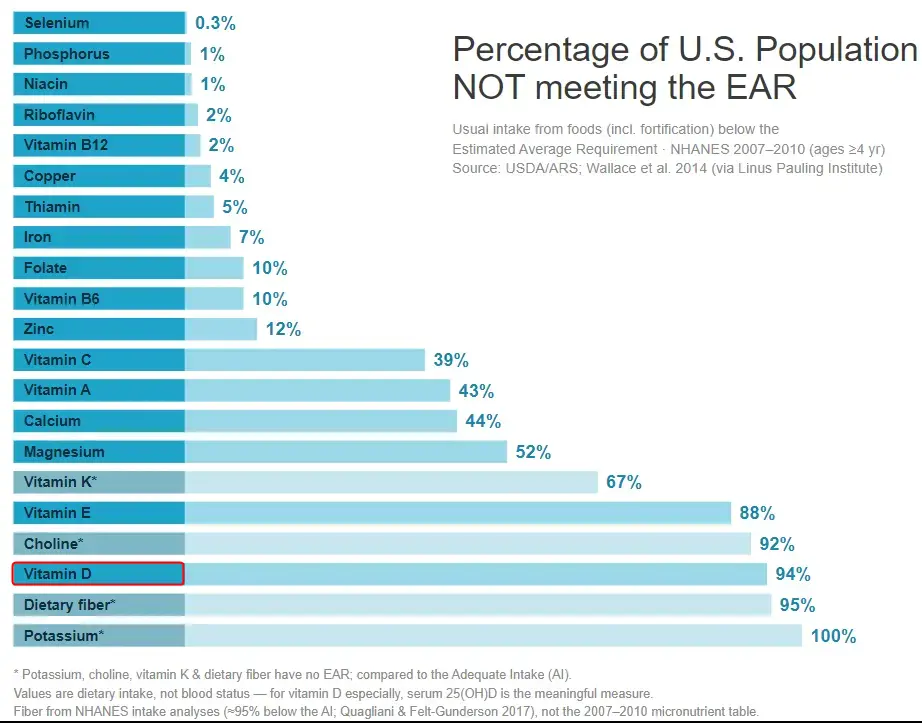
- People are not getting even the minimal nutrients, such as Vitamin D
Phosphate
- Important for human health: Calcium, Magnesium, their ratio, and Phosphate
- Chronic kidney disease and PTH – Calcium – Phosphate – Vitamin D
Vitamin B1
- Vitamin B1, B2, B3, B5, B6, B12, B15, etc
lack of B1 ==> Beriberi