
UK continues to recommend the lowest vitamin D levels in the world (10 ng)
Summary and Key Findings
| Region/Country | Deficiency Threshold | Adequacy/Sufficiency Target | Daily Intake Recommendation |
|---|---|---|---|
| United Kingdom | <25 nmol/L (~10 ng/mL) | ≥25 nmol/L | 10 μg (400 IU) |
| Netherlands | <30 nmol/L (ages 4-70); <50 nmol/L (70+) | 30-50 nmol/L depending on age | 10-20 μg depending on age |
| United States (IOM) | <30 nmol/L (12 ng/mL) | ≥50 nmol/L (20 ng/mL) | 600-800 IU depending on age |
| US Endocrine Society (2011) | <50 nmol/L (20 ng/mL) | ≥75 nmol/L (30 ng/mL) | 1,500-2,000 IU |
| Canada | <50 nmol/L (20 ng/mL) | 75-80 nmol/L (30-32 ng/mL) | 600-800 IU; 2,000 IU recommended by some experts |
| Mexico (2025) | <50 nmol/L (20 ng/mL) | 75-150 nmol/L (30-60 ng/mL) | 600-4,000 IU depending on status |
| EFSA / EU | <30 nmol/L (12 ng/mL) | ≥50 nmol/L (20 ng/mL) | 600 IU (15 μg) |
| Germany/Austria/Switzerland | <30 nmol/L (12 ng/mL) | ≥50 nmol/L (20 ng/mL) | 800 IU (20 μg) |
| Nordic Countries | <30 nmol/L (12 ng/mL) | ≥50 nmol/L (20 ng/mL) | 10 μg (ages 1-74); 20 μg (75+) |
| France | <25 nmol/L (10 ng/mL) severe deficiency | Higher levels preferred | Varied recommendations |
| Ireland | <30 nmol/L (12 ng/mL) | ≥50 nmol/L (20 ng/mL) | 15 μg (600 IU); 20 μg (65+) |
| Japan | <50 nmol/L (20 ng/mL) | ≥75 nmol/L (30 ng/mL) | Not standardized |
| China | <30 nmol/L (12 ng/mL) | ≥50 nmol/L (20 ng/mL) | Follows IOM guidelines |
| India | <25 nmol/L (10 ng/mL) severe; <50 nmol/L deficiency | 100-150 nmol/L (40-60 ng/mL) optimal | 800-1,000 IU minimum |
| Australia/New Zealand | <50 nmol/L (20 ng/mL) | ≥50 nmol/L (20 ng/mL) | 600-800 IU depending on age |
| Brazil | <50 nmol/L (20 ng/mL) | ≥75 nmol/L (30 ng/mL) | Not standardized nationally |
| Russia | <25 nmol/L (10 ng/mL) severe; <50 nmol/L deficiency | 75-150 nmol/L (30-60 ng/mL) optimal | 1,000-1,500 IU for prevention |
| South Africa | <30 nmol/L (12 ng/mL) in some guidelines | ≥50 nmol/L (20 ng/mL) | 600-800 IU |
| WHO (infants) | <30 nmol/L | ≥50 nmol/L | 5-10 μg (200-400 IU) |
Conclusion
As of January 2026, only the United Kingdom maintains vitamin D adequacy guidelines centered on a 25 nmol/L (approximately 10 ng/mL) threshold as their primary population-protective level. The Netherlands historically adopted similar conservative standards but has evolved toward acknowledging 50 nmol/L as preferable, particularly for older adults. France recognizes 25 nmol/L as a marker of severe deficiency but does not consider it adequate for optimal health.
The overwhelming international consensus, encompassing North America, Europe, Asia-Pacific, Latin America, Africa, and major medical organizations, has converged on substantially higher thresholds. Most countries now define vitamin D deficiency at levels below 50 nmol/L (20 ng/mL), with many organizations and nations advocating for target levels of 75 nmol/L (30 ng/mL) or higher for optimal health outcomes.
This global shift reflects evolving scientific understanding that vitamin D requirements extend beyond preventing overt skeletal disease (rickets and osteomalacia) to optimizing calcium metabolism, supporting bone mineral density, reducing fracture risk, and potentially influencing other health outcomes. The UK's maintenance of the 25 nmol/L threshold represents a uniquely conservative, skeletal-focused approach that prioritizes prevention of severe deficiency diseases at the population level while remaining subject to ongoing scientific debate and criticism from researchers advocating for higher targets.
For individuals and healthcare providers, this divergence in international standards highlights the importance of considering both population-level public health guidance and individualized risk factors, clinical conditions, and emerging evidence when making decisions about vitamin D supplementation and target serum levels.
Executive Summary
The question of which countries still consider 10 ng/mL (approximately 25 nmol/L) of serum 25-hydroxyvitamin D [25(OH)D] as adequate reveals a complex landscape of diverging international guidelines. Current evidence indicates that only the United Kingdom maintains this conservative threshold as their primary population-protective level, defining deficiency risk at levels below 25 nmol/L (approximately 10 ng/mL). The Netherlands historically adopted similar standards but has since evolved their recommendations. Most other nations and medical organizations worldwide have converged on substantially higher thresholds, typically defining deficiency at levels below 20 ng/mL (50 nmol/L) or even 30 ng/mL (75 nmol/L).
This report examines the historical context of these guidelines, identifies current national and organizational standards, and analyzes the scientific and policy debates that have shaped vitamin D recommendations globally as of January 2026.
The United Kingdom: The Primary Outlier
The United Kingdom remains the most prominent example of a country maintaining a conservative vitamin D threshold. The UK Scientific Advisory Committee on Nutrition (SACN), in their comprehensive 2016 report "Vitamin D and Health," established that serum 25(OH)D concentrations below 25 nmol/L (approximately 10 ng/mL) indicate increased risk of poor musculoskeletal health. This threshold represents a "population protective level"—the concentration that individuals should maintain throughout the year to avoid skeletal complications including rickets and osteomalacia. gov
Based on this threshold, SACN recommended a Reference Nutrient Intake (RNI) of 10 μg (400 IU) per day for all UK residents aged 4 years and older, including pregnant and lactating women. This intake level was calculated to ensure that 97.5% of the population maintains serum 25(OH)D concentrations at or above 25 nmol/L when ultraviolet B (UVB) sunshine exposure is minimal. cios.icb.nhs
The UK approach has faced substantial criticism from vitamin D researchers. A 2021 analysis published in Clinical Medicine argued that the UK's 25 nmol/L threshold was based on consensus rather than systematic data analysis, with critics suggesting the 400 IU daily recommendation may coincidentally match the amount of vitamin D in one teaspoon of cod liver oil—a historical Norwegian standard. Experts have argued that a higher threshold of 50 nmol/L (20 ng/mL) would be more evidence-based and that many individuals require initial higher doses (4,000 IU daily for four weeks) to achieve sufficiency quickly. nutraingredients
Despite these criticisms, Public Health England and the National Health Service continue to recommend 10 μg (400 IU) daily supplementation for all adults, particularly during autumn and winter months (October to March). The UK approach defines vitamin D status using three tiers: nhsdorset.nhs
- Less than 25 nmol/L: Vitamin D deficiency
- 25-50 nmol/L: Insufficient for some patients
- Greater than 50 nmol/L: Sufficient for most patients
The Netherlands: A Conservative Approach with Nuanced Evolution
The Netherlands has historically maintained one of the most conservative vitamin D policies globally, originally adopting the UK's 1998 COMA recommendations that defined 25 nmol/L (10 ng/mL) as the threshold at which risk of rickets and osteomalacia increases for persons aged 0-70 years. The Dutch Health Council's 2000 recommendations established dietary reference values based on a target of at least 30 nmol/L for serum 25(OH)D levels year-round. pmc.ncbi.nlm.nih
However, the Netherlands has evolved its approach over time. Their 2012 guidelines maintained a conservative stance but introduced more nuanced recommendations:
- Target of 30 nmol/L for most age groups (4-70 years), representing adequate supply for general population healthcouncil
- Target of 50 nmol/L for adults aged 70 and older, to reduce fracture risk and prevent falls healthcouncil
- Daily requirement of 10 μg for ages 4-70 years, increasing to 20 μg for those over 70 healthcouncil
Recent data from 2023 shows improved vitamin D status in the Netherlands, with only 7% of women aged 50-69 years and 26% of men aged 70+ years showing deficiency (defined as <50 nmol/L), representing significant improvement from 2011 levels. The Netherlands now acknowledges that while 25-30 nmol/L represents the minimum to prevent severe skeletal disease, higher levels (≥50 nmol/L) are preferable for optimal health. nature
Other Countries: The Global Consensus on Higher Thresholds
The overwhelming majority of countries and medical organizations worldwide have adopted substantially higher vitamin D adequacy thresholds than 10 ng/mL (25 nmol/L). This global consensus reflects accumulated evidence suggesting that higher levels are necessary for optimal bone health and potentially for other health outcomes.
North America
United States: The Institute of Medicine (now National Academy of Medicine) considers serum 25(OH)D levels below 30 nmol/L (12 ng/mL) as indicating risk of deficiency, with levels ≥50 nmol/L (20 ng/mL) considered sufficient for 97.5% of the population in terms of bone health. The US Endocrine Society recommends even higher targets, defining deficiency as <20 ng/mL (50 nmol/L) and advocating for levels ≥30 ng/mL (75 nmol/L) for optimal health. frontiersin
Canada: Canadian health authorities recommend vitamin D intake to achieve serum 25(OH)D levels of 50 nmol/L (20 ng/mL) as a minimum, with many experts advocating for optimal levels of 75-80 nmol/L (30-32 ng/mL). Studies indicate that 70-97% of Canadians demonstrate vitamin D insufficiency when using these higher thresholds. The recommended daily intake is 600 IU for adults under 70 and 800 IU for those over 70, with supplementation of ≥400 IU/day shown to keep 90% of the population above 50 nmol/L year-round. ec.europa
Mexico: Recent 2025 guidelines from a multidisciplinary panel of nine Mexican medical organizations define vitamin D status as follows: pmc.ncbi.nlm.nih- Deficiency: <20 ng/mL (<50 nmol/L)- Insufficiency: 20-29 ng/mL (50-75 nmol/L)- Sufficiency: 30-100 ng/mL (75-250 nmol/L)
Mexican guidelines recommend maintaining serum levels between 30-60 ng/mL for optimal health and recommend supplementation with 6,000 IU daily for three months in cases of hypovitaminosis D. scribd
Europe
European Food Safety Authority (EFSA): EFSA adopted IOM 2011-like guidelines, defining adequate vitamin D supply as serum 25(OH)D ≥50 nmol/L (20 ng/mL). The EFSA 2016 recommendations align with the IOM threshold and consider levels below 50 nmol/L as potentially inadequate for bone health. aub.edu
Germany, Austria, and Switzerland (DACH): The DACH nutrition societies established 50 nmol/L (20 ng/mL) as the indicator of optimal vitamin D status. German population data shows that 30.2% of adults have serum 25(OH)D <30 nmol/L (deficient), 31.3% have 30-50 nmol/L (suboptimal), and only 38.4% achieve adequate status ≥50 nmol/L. The German Federal Institute for Risk Assessment bases their dietary reference value on achieving 50 nmol/L plasma concentration. pmc.ncbi.nlm.nih
Nordic Countries (Denmark, Finland, Norway, Sweden, Iceland): Nordic countries have adopted the 2012 Nordic Nutrition Recommendations (NNR), which align with IOM 2011 guidelines. They define deficiency as serum 25(OH)D <30 nmol/L and recommend achieving levels ≥50 nmol/L for sufficiency. The recommended intake is 10 μg/day for most age groups and 20 μg/day for those aged 75+ years. Finland has achieved notable success through extensive vitamin D fortification policies, with mean adult intake reaching the recommended 10 μg/day and lower deficiency rates compared to other Nordic nations. pmc.ncbi.nlm.nih
France: France defines vitamin D deficiency as <10 ng/mL (approximately 25 nmol/L), with this threshold used primarily to identify severe deficiency. Population data from 2006 (ENNS) showed 4.4% with deficiency <10 ng/mL, increasing to 6.5% in 2015 (ESTEBAN). However, French health authorities recognize that higher thresholds are preferable for optimal health, though they have not mandated food fortification programs for the general population. hcsp
Ireland: Ireland follows a similar pattern to France, with one 2014 study citing vitamin D deficiency as 25(OH)D <30 nmol/L but recognizing that inadequacy occurs at levels <50 nmol/L. Only 6.7% of Irish adults had serum 25(OH)D <30 nmol/L year-round, but 40.1% had levels below 50 nmol/L, which the Institute of Medicine considers inadequate for bone health. Irish recommendations call for 15 μg/day (600 IU) for adults and 20 μg/day for those over 65 years. pubmed.ncbi.nlm.nih
Spain and Italy: Mediterranean countries with abundant sunshine nonetheless show high prevalence of vitamin D insufficiency. Spain reported 83% deficiency rates in adults over 44 years using a <20 ng/mL threshold. Italy shows 36% of the general population deficient, with 86% of Italian women over 70 having blood levels below 10 ng/mL at the end of winter. Both countries follow IOM or Endocrine Society guidelines defining deficiency at <20 ng/mL (50 nmol/L). nutritioninsight
Asia-Pacific
Japan: Japan has established distinct thresholds compared to Western nations. The 2017 Japanese consensus from multiple medical societies defines: pubmed.ncbi.nlm.nih- Vitamin D sufficient: ≥30 ng/mL (75 nmol/L)- Vitamin D insufficient: 20-29 ng/mL (50-75 nmol/L)- Vitamin D deficient: <20 ng/mL (50 nmol/L)
This represents a relatively high standard, with Japanese experts recommending supplementation to achieve levels of at least 30 ng/mL for bone and mineral health. Recent research suggests that mortality risk increases at levels below approximately 30 nmol/L (12 ng/mL) in the Japanese population, accounting for seasonal and sex variations. cambridge
China: Chinese health authorities have adopted the National Academy of Medicine standard, defining vitamin D deficiency as <30 nmol/L, insufficiency as 30-49.9 nmol/L, and sufficiency as ≥50 nmol/L. Studies in Chinese adolescents suggest that achieving serum 25(OH)D levels above 20-37 nmol/L (8-15 ng/mL) has positive influences on bone mineral density, though 97% of adolescents in some studies had levels below 50 nmol/L. Chinese adult populations show mean 25(OH)D concentrations around 45 nmol/L, with 69.2% of middle-aged and elderly individuals experiencing deficiency (<50 nmol/L). academic.oup
India: India faces particularly severe vitamin D deficiency challenges. Indian endocrinology consensus guidelines define: pmc.ncbi.nlm.nih- Severe deficiency: <10 ng/mL (25 nmol/L)- Deficiency: <20 ng/mL (50 nmol/L)- Insufficiency: 20-30 ng/mL (50-75 nmol/L)
Indian experts recommend maintaining physiological 25(OH)D levels of 40-60 ng/mL (100-150 nmol/L) for optimal health. Studies show 60-97% prevalence of vitamin D deficiency across all age groups and regions, with mean serum 25(OH)D levels around 13.5-18 ng/mL in many populations. Levels below 10 ng/mL are associated with numerous skeletal and extra-skeletal complications, justifying its designation as severe deficiency. nams-india
Australia and New Zealand: Both countries define vitamin D adequacy as serum 25(OH)D ≥50 nmol/L (20 ng/mL), with deficiency classified as levels below 50 nmol/L and moderate-to-severe deficiency as <30 nmol/L. The 2011-13 Australian Health Survey found that 6.5% of adults had moderate or severe deficiency (<30 nmol/L) and 17% had mild deficiency (30-49 nmol/L). Recommended dietary intake ranges from 5 μg/day for adults 19-50 years to 15 μg/day for those over 70 years, assuming minimal sun exposure. pubmed.ncbi.nlm.nih
Southeast Asia: Vitamin D deficiency is highly prevalent across Southeast Asia despite abundant sunshine. Studies define deficiency as 25(OH)D <50 nmol/L (20 ng/mL), with prevalence ranging from 6-70% depending on population and lifestyle factors. Malaysia, a tropical country at the equator, shows that only one-third of participants achieve sufficiency (≥50 nmol/L), largely explained by cultural dress practices limiting sun exposure. pmc.ncbi.nlm.nih
Middle East and North Africa
Countries in the Middle East and North Africa show extremely high prevalence of vitamin D deficiency despite abundant sunlight. Saudi Arabia reports 87.8% of men and 80% of women with serum 25(OH)D <50 nmol/L, with mean levels around 29 nmol/L. United Arab Emirates studies show 72% of the population is vitamin D deficient (<20 ng/mL) and 10% insufficient (20-30 ng/mL), with overall mean serum levels of approximately 20 ng/mL. These countries generally adopt international standards defining deficiency at <20 ng/mL (50 nmol/L) and follow IOM or Endocrine Society guidelines. jarlife
Latin America
Brazil: Brazilian health authorities define vitamin D deficiency as 25(OH)D <20 ng/mL (50 nmol/L) and insufficiency as <30 ng/mL (75 nmol/L). Despite abundant sunshine, Brazil shows notable vitamin D deficiency, with national studies reporting mean 25(OH)D levels of 28.7 ng/mL and prevalence of 15.3% deficiency and 50.9% insufficiency. Older Brazilian adults (50+ years) show considerably lower deficiency rates, with only 1.7% below 30 nmol/L and 16% below 50 nmol/L, attributed to geographic factors and dietary patterns. pmc.ncbi.nlm.nih
Africa
African countries generally adopt international standards defining severe deficiency as <30 nmol/L (12 ng/mL) and deficiency as <50 nmol/L (20 ng/mL). A systematic review found that one in five Africans have serum 25(OH)D <30 nmol/L, with higher deficiency rates in northern African countries, South Africa, urban areas, women, and newborns. Mean serum 25(OH)D across African populations is approximately 68 nmol/L. pmc.ncbi.nlm.nih
South Africa specifically defines vitamin D deficiency as <12 ng/mL (30 nmol/L) according to some guidelines, with insufficiency between 12-19 ng/mL and sufficiency ≥20 ng/mL. However, South African health professionals also reference Endocrine Society guidelines recommending levels of 30-50 ng/mL for older adults to minimize fracture and fall risk. www1.ampath.co
Russia
Russian health authorities define vitamin D status using Endocrine Society-aligned thresholds: medarhive- Severe deficiency: <10 ng/mL (25 nmol/L)- Deficiency: 10-20 ng/mL (25-50 nmol/L)- Insufficiency: 20-30 ng/mL (50-75 nmol/L)- Optimal levels: 30-60 ng/mL (75-150 nmol/L)
Population studies show mean 25(OH)D concentrations around 24 ng/mL, with 5.6% having severe deficiency (<10 ng/mL), 34% deficiency, and 36.4% insufficiency. Only 27% of the Russian population achieves target vitamin D levels above 30 ng/mL. pmc.ncbi.nlm.nih
Major Medical Organizations: Divergent Standards
The international vitamin D landscape is characterized by two primary competing frameworks that have shaped national policies globally.
Institute of Medicine / National Academy of Medicine (Conservative Standard)
The IOM 2011 guidelines, which many countries have adopted, define: pmc.ncbi.nlm.nih- Risk of deficiency: <30 nmol/L (12 ng/mL)- Potentially inadequate for some: 30-50 nmol/L (12-20 ng/mL)- Sufficient for 97.5% of population: ≥50 nmol/L (20 ng/mL)
These recommendations focus exclusively on skeletal health outcomes and are considered conservative by some experts. Countries adopting IOM standards include the United States, Canada, Nordic countries, Germany/Austria/Switzerland, and the European Food Safety Authority. pmc.ncbi.nlm.nih
Endocrine Society (Higher Standard)
The 2011 Endocrine Society Clinical Practice Guidelines established more aggressive targets: pmc.ncbi.nlm.nih- Deficiency: <20 ng/mL (50 nmol/L)- Insufficiency: 21-29 ng/mL (52.5-72.5 nmol/L)- Sufficiency: 30-100 ng/mL (75-250 nmol/L)- Possible harm: >100 ng/mL (>250 nmol/L)
These guidelines recommend daily intake of 1,500-2,000 IU for adults to maintain serum 25(OH)D above 30 ng/mL, considering both skeletal and potential extra-skeletal health benefits. Countries and organizations adopting Endocrine Society-aligned standards include Japan, Mexico, Russia, India, and numerous specialty medical societies worldwide. globalrph
Important 2024 Update: The Endocrine Society released revised guidelines in July 2024 that represent a significant shift in approach. The new guidelines no longer endorse specific 25(OH)D thresholds to define vitamin D sufficiency, insufficiency, and deficiency, abandoning their previous target of 30 ng/mL (75 nmol/L). Instead, they recommend against routine vitamin D supplementation beyond Institute of Medicine Dietary Reference Intakes for most healthy individuals, and suggest against routine 25(OH)D screening in the general population. This represents convergence toward the more conservative IOM approach. academic.oup
The WHO Position: Limited Specific Guidance
The World Health Organization (WHO) does not maintain comprehensive global vitamin D adequacy guidelines for adults comparable to those of the IOM or Endocrine Society. WHO guidance focuses primarily on specific populations, particularly infants.
For infants, WHO identifies that serum 25(OH)D values below 30 nmol/L indicate high risk of vitamin D deficiency, while healthy concentrations are considered to be at or above 50 nmol/L. WHO recommends supplementation of 5-10 μg (200-400 IU) daily for infants from birth to one year to support adequate vitamin D status. who
WHO has not established universal vitamin D adequacy thresholds for adult populations across all countries, allowing national health authorities to set their own standards based on regional needs and evidence interpretation. This policy flexibility has contributed to the significant international variation in vitamin D recommendations.
Historical Context: Why 10 ng/mL Was Once Accepted
The 10 ng/mL (approximately 25 nmol/L) threshold has historical roots in early understanding of vitamin D's role in preventing severe skeletal diseases—specifically rickets in children and osteomalacia in adults. Early research established that serum 25(OH)D levels below 25-30 nmol/L dramatically increase the risk of these overt skeletal manifestations. nature
The UK's adoption of this threshold reflects a conservative, risk-averse approach focused exclusively on preventing severe bone disease at the population level. This approach was consistent with earlier dietary reference values from the 1990s when vitamin D recommendations were established primarily to prevent deficiency diseases rather than optimize health. assets.publishing.service.gov
However, subsequent research has demonstrated that:
Parathyroid hormone (PTH) elevation begins at 25(OH)D levels well above 25 nmol/L, typically around 50-75 nmol/L, indicating calcium metabolism is not fully optimized at the 25 nmol/L threshold. bmj
Calcium absorption is maximized at serum 25(OH)D levels above 75-80 nmol/L (30-32 ng/mL). ec.europa
Bone mineral density and fracture risk show optimal outcomes at levels ≥50 nmol/L (20 ng/mL), with some studies suggesting benefits extend to 75 nmol/L (30 ng/mL). academic.oup
All-cause mortality risk increases at serum 25(OH)D below 50 nmol/L (20 ng/mL), with some evidence suggesting risk thresholds may vary by population, season, and sex. nutritionsource.hsph.harvard
These findings have led most countries and medical organizations to adopt higher adequacy thresholds than the historical 25 nmol/L standard, leaving the UK as a notable exception maintaining this conservative approach.
The UK Controversy: Scientific Debate and Policy Implications
The UK's maintenance of a 25 nmol/L (10 ng/mL) threshold has generated substantial scientific controversy. Critics argue this approach: sciencedirect
- Lacks systematic evidence base: The threshold appears based on expert consensus rather than rigorous dose-response analysis
- May perpetuate deficiency: 400 IU daily supplementation may be insufficient for many individuals to reach even 50 nmol/L, let alone higher targets
- Ignores PTH dynamics: Secondary hyperparathyroidism commonly occurs at 25(OH)D levels above 25 nmol/L but below 50-75 nmol/L
- Misses fracture prevention benefits: Evidence suggests fracture risk reduction requires levels ≥50 nmol/L
Proponents of the UK approach emphasize that: efsa.europa
- Focus on bone health: Guidelines should be based on robust evidence for skeletal outcomes, not speculative extra-skeletal benefits
- Population-level protection: The goal is preventing severe deficiency (rickets/osteomalacia) across the entire population
- Pragmatic supplementation: 400 IU daily is safe, affordable, and achievable through diet and supplements
- Uncertainty regarding higher targets: Insufficient evidence exists to justify population-wide recommendations for 25(OH)D >50 nmol/L
The 2016 joint explanatory note between EFSA and SACN acknowledged these differences in interpretation, with EFSA selecting 50 nmol/L and SACN selecting 25 nmol/L as their respective target serum concentrations, both based on musculoskeletal health outcomes but interpreting the evidence differently. efsa.europa
Related in Vitamin D Life
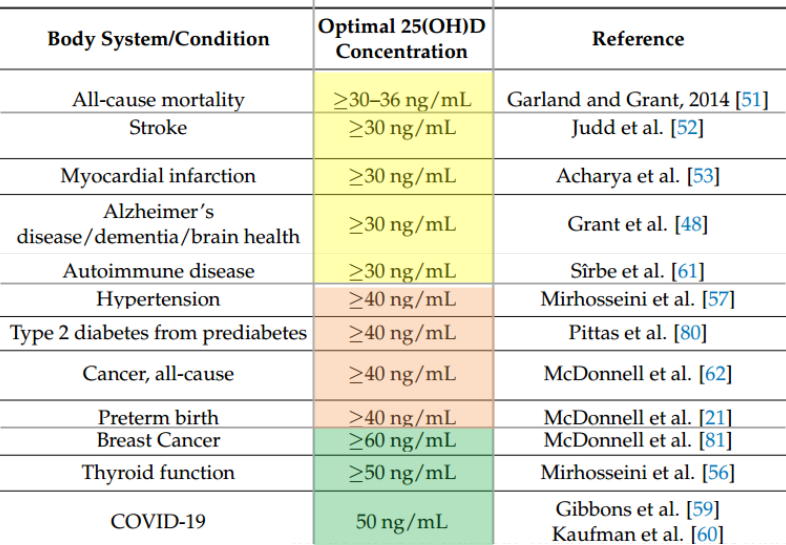
- Need 40 to 60 ng of Vitamin D – 48 scientists call for action – 2015
- Another Vitamin D consensus for 40-60 ng – India
- Vitamin D consensus by 9 Mexican groups: 30 to 60 ng
- French pediatric consensus: 30 – 60 ng of Vitamin D
- Vitamin D Consensus, Brazil – Many people need 30 – 60 ng
- Vitamin D: 40-70 ng is optimal, sometimes more is needed - Grant, Sunil, Pawel, Cheng
- Is 50 ng of vitamin D too high, just right, or not enough
- Vitamin D levels vs disease and Best Practices
UK