Vitamin K as an Endocrine Modulator
Vitamin K as an Endocrine Modulator: Mechanistic Links to Glucose Metabolism and Beyond - April 2026
Nutrients 2026, 18(8), 1183; https://doi.org/10.3390/nu18081183
Wojciech Matuszewski 1,,Mikołaj Madeksza 1,Michał Szklarz 1,Aleksandra Rutkiewicz 1,Joanna Rutkowska 1 and Joanna Maria Harazny 2,3 POLAND
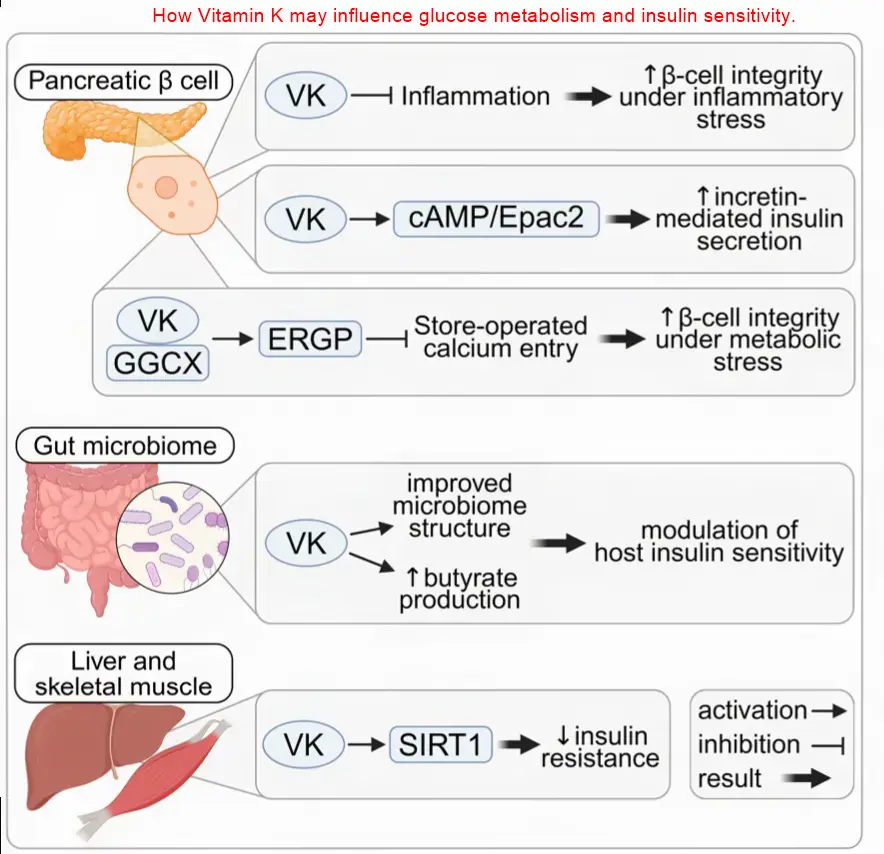
Vitamin K (VK), traditionally recognized for its role in coagulation, is increasingly implicated in extrahepatic processes, including glucose metabolism and calcium regulation. A suboptimal VK status is common in the general population and may limit these functions, yet evidence linking VK to glucose metabolism and other endocrine axes remains heterogeneous and incompletely synthesized. This narrative review integrates mechanistic, observational, and interventional evidence to examine the role of VK across the endocrine system, with particular emphasis on glucose metabolism.
Mechanistic studies indicate that VK
- supports pancreatic β-cell function,
- modulates peripheral insulin sensitivity, and
- facilitates proper calcium distribution.
Observational studies consistently associate a higher VK status with a lower risk of type 2 diabetes, while interventional studies suggest that VK supplementation may improve glucose metabolism, primarily in metabolically impaired populations. In bone and mineral metabolism,
VK acts synergistically with calcitriol, with combined supplementation showing more consistent benefits in skeletal outcomes than either vitamin alone. Evidence for VK involvement in other endocrine axes, including reproductive and inflammatory pathways, remains limited and largely mechanistic. Overall, the available evidence supports a context-dependent role for VK in glucose metabolism, influenced by baseline nutritional and metabolic status and outcome selection, as well as a synergistic interaction with calcitriol and parathormone in calcium regulation. Future clinical studies should incorporate baseline VK status stratification, dynamic measures of insulin sensitivity, and adequately powered designs to clarify the therapeutic relevance of VK across endocrine and metabolic outcomes.
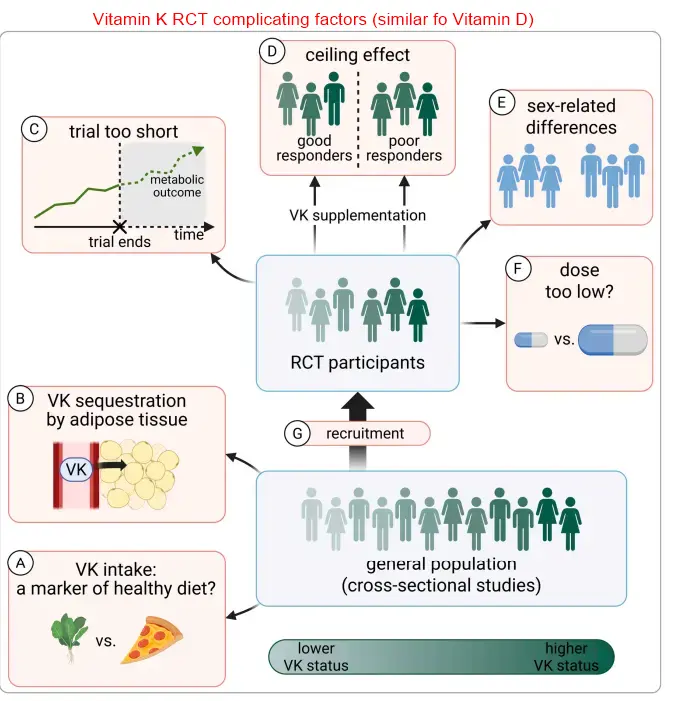
Figure 3. Factors complicating clinical research on vitamin K. Notes:
- (A)—VK intake is often assumed to reflect healthier dietary patterns; however, mixed meals and convenience foods are major contributors to VK1 intake due to vegetable oil content, while VK2 is derived primarily from cheese, other dairy products, and meat.
- (B)—VK can be sequestered in adipose tissue, potentially reducing its bioavailability in individuals with a higher body fat percentage.
- (C)—Metabolic changes occur gradually, and many trials may have been too short to detect meaningful effects.
- (D)—The biochemical and clinical effects of VK supplementation depend on baseline VK status; a ceiling effect in individuals with an adequate status may obscure benefits associated with correcting a suboptimal VK status.
- (E)—The available RCT evidence includes an underrepresentation of men, in whom VK may act through distinct mechanisms and for whom supplementation effects may differ from those observed in women.
- (F)—The dose and form of VK used in some trials may have been insufficient to elicit extrahepatic effects.
- (G)—Trial participants are often health-conscious volunteers and therefore less likely to have low nutrient intakes, increasing the proportion of individuals susceptible to ceiling effects
Related in Vitamin D Life
- T2 Diabetes is also fought by Vitamin K2 – several studies
- COVID is also associated with low Vitamin K - many studies
- Vitamin K2 substantially reduces risk of T2 Diabetes (7 percent for every 10 ug) – review
- People consuming more Vitamin K1 were 40 percent less likely to get Pancreatic Cancer
- Overview Vitamin K and Vitamin D
- Vitamin K1 and Vitamin K2 importance to health
- Vitamins K1 and K2 are BOTH required for health
The study on this page does not clearly distinguish K1 from the various forms of K2