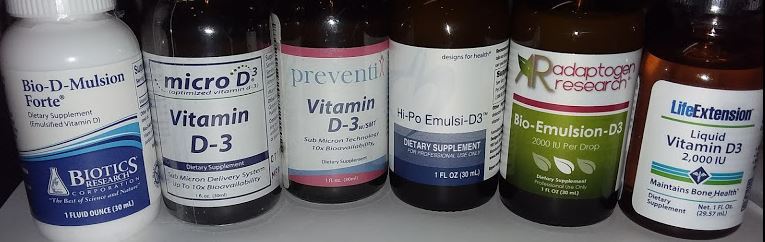
Nanoemulsion, nanoliposome, and conventional Vitamin D compared
Nanoemulsion vs nanoliposome vs conventional vitamin D: a deep comparison
Nanoemulsion and nanoliposome vitamin D formulations both demonstrate meaningfully superior bioavailability over conventional supplements, but through distinct mechanisms and with very different levels of clinical evidence.
Nanoemulsion vitamin D has the strongest human trial support, with multiple RCTs showing 36–43% higher bioavailability over oil-based softgels and proven efficacy in IBD patients.
Nanoliposomal vitamin D shows potentially larger bioavailability gains (4–13× in small studies) but with fewer and smaller human trials. Conventional vitamin D remains the standard of care — extensively validated in landmark trials like VITAL (n=25,871), inexpensive at $0.01–0.03/1,000 IU, and effective in most healthy individuals when taken with dietary fat. No head-to-head trial has ever directly compared nanoemulsion against nanoliposomal vitamin D in humans, representing the most important research gap in this space.
Cost, commercial availability, and practical tradeoffs
| Factor | Conventional | Nanoemulsion | Nanoliposome |
|---|---|---|---|
| Cost per 1,000 IU | $0.01–0.03 | $0.06–0.16 | $0.10–0.33 |
| Price premium vs. conventional | — | 3–10× | 5–20× |
| Formats available | Softgels, tablets, drops, gummies | Liquid solution, buccal spray | Liquid pump, softgels, packets |
| Leading brands | Nature Made, Kirkland, NOW, Carlson | DePURA (India), Quicksilver Scientific, NutraSal | Quicksilver Scientific, Designs for Health, Cymbiotika |
| Global availability | Universal, OTC everywhere | Broad in India; specialty channels in West | Specialty/premium channels |
| Shelf life (unopened) | 2–3 years | 6–12 months (refrigerated best) | 6–24 months (refrigerated) |
| Requires refrigeration? | No | Recommended | Often recommended |
| Requires fat with meals? | Yes (11–15 g minimum) | No | No |
Conventional vitamin D's cost advantage is enormous — a year's supply of 5,000 IU/day costs under $15 from budget brands. Nanoemulsion products cost roughly $50–100/year at equivalent doses. Premium liposomal products (Quicksilver, Cymbiotika) can exceed $200/year. However, if enhanced bioavailability allows lower dosing, the effective cost differential narrows.
How each form is built and how vitamin D gets inside
Conventional vitamin D (oil-based softgels, tablets, liquid drops)
Conventional vitamin D3 (cholecalciferol) is delivered in three main formats. Oil-based softgels contain vitamin D3 molecularly dissolved in a carrier oil — most commonly MCT/coconut oil (Sports Research, NatureWise), olive oil (HUM Nutrition), or soybean oil (generic brands) — sealed inside a gelatin shell. There are no discrete particles; the vitamin exists as individual molecules in solution. Dry powder tablets contain crystalline or spray-dried vitamin D3 (particle size ~100–1,000 μm) compressed with excipients like microcrystalline cellulose, dicalcium phosphate, and magnesium stearate. Liquid drops are simply vitamin D3 dissolved in MCT or olive oil, dispensed via dropper (brands like Carlson Super Daily D3, Ddrops). Softgels and drops are pharmacologically equivalent; tablets are measurably less bioavailable because the vitamin must first dissolve from a solid matrix before emulsification can begin.
Nanoemulsion vitamin D
A nanoemulsion is a colloidal oil-in-water dispersion with droplet sizes of 20–200 nm, stabilized by a surfactant monolayer (not a bilayer). Vitamin D3 is dissolved in the oil core — typically MCT, corn oil, or fish oil — before high-energy processing (high-pressure homogenization, ultrasonication, or microfluidization) reduces the droplets to nanoscale. Surfactants include polysorbate 80 (Tween 80), lecithin, and quillaja saponin. The structure is an oil droplet coated with surfactant molecules whose hydrophilic heads face outward and hydrophobic tails embed in the oil phase. Encapsulation efficiency typically exceeds 91–98%. The leading clinical product is DePURA (Sanofi India), which uses proprietary "Aqueol" nanotechnology. Nanoemulsions are thermodynamically unstable but kinetically stable — they resist coalescence for months when properly formulated but can degrade via Ostwald ripening if not designed with long-chain triglycerides.
Nanoliposome (liposomal) vitamin D
Nanoliposomes are spherical vesicles composed of a phospholipid bilayer — primarily phosphatidylcholine from soy or sunflower lecithin — that self-assembles around an aqueous core. Cholesterol is typically added at 10–30 mol% to rigidify the membrane and reduce leakage. Because vitamin D3 is highly hydrophobic (logP >7), it integrates within the lipid bilayer itself, not in the aqueous interior. Molecular dynamics simulations (Dałek et al., 2022, Nanomedicine) confirm that vitamin D3 molecules sit between the two phospholipid leaflets with their hydroxyl group oriented toward the polar headgroups. Manufacturing methods include thin-film hydration followed by sonication or extrusion through 100 nm polycarbonate filters. Typical particle size ranges from 50–200 nm with encapsulation efficiencies >93% (Mohammadi et al., 2014, Advanced Pharmaceutical Bulletin). Key commercial products include Quicksilver Scientific D3K2, Designs for Health Liposomal D Supreme, and Cymbiotika D3+K2+CoQ10.
The critical structural difference between nanoemulsions and nanoliposomes
The distinction is architecturally fundamental. A nanoemulsion droplet is a solid or liquid oil core wrapped in a single surfactant layer — essentially a tiny oil globule. It has high loading capacity for lipophilic compounds because the entire core volume is available for drug dissolution. A nanoliposome is a hollow phospholipid bilayer vesicle with an aqueous interior — structurally mimicking a cell membrane. Fat-soluble drugs are confined to the thin bilayer, which limits loading capacity compared to the oil core of a nanoemulsion.
Compare Nanoemulsion, Nanoliposome
| Parameter | Nanoemulsion | Nanoliposome |
|---|---|---|
| Core structure | Oil droplet | Aqueous cavity |
| Coating | Surfactant monolayer | Phospholipid bilayer |
| Where vitamin D sits | Dissolved in oil core | Embedded in bilayer |
| Drug loading for lipophilic compounds | Higher (entire core volume) | Lower (bilayer only) |
| Release kinetics (oral) | Faster/burst release via lipid digestion | More sustained/controlled via membrane degradation |
| Biological membrane mimicry | Low | High (mirrors cell membranes) |
| Manufacturing scalability | Easier (HPH, ultrasonication) | More complex (extrusion, thin-film hydration) |
| Typical size | 20–200 nm | 50–200 nm |
| Stability mechanism | Kinetic (surfactant barrier) | Membrane integrity (cholesterol-dependent) |
Release kinetics differ meaningfully. Nanoemulsions tend toward burst release as GI lipases rapidly digest the oil phase, liberating vitamin D quickly. Nanoliposomes provide more controlled, sustained release through gradual bilayer degradation. In a direct comparison using lycobetaine (not vitamin D), PEGylated liposomes showed extended circulation and sustained release versus nanoemulsions (Chen et al., 2018, European Journal of Pharmaceutical Sciences).
How each form is absorbed: bile salts, chylomicrons, and fat dependence
Conventional vitamin D requires bile-mediated micellar solubilization
The absorption of conventional vitamin D follows a well-characterized multi-step process (Borel et al., 2015, Critical Reviews in Food Science and Nutrition; Reboul et al., 2011, Molecular Nutrition & Food Research). Dietary fat triggers CCK release, stimulating bile secretion. Bile salts and pancreatic lipase break down triglycerides and form mixed micelles (~4–10 nm) that solubilize the highly lipophilic vitamin D3. These micelles deliver vitamin D to the brush border, where uptake occurs via transporters SR-BI, CD36, and NPC1L1 at physiological concentrations, or by passive diffusion at pharmacological doses. Inside the enterocyte, vitamin D is packaged into chylomicrons and secreted into the lymphatic system (lacteals), bypassing first-pass hepatic metabolism. About 80% of the absorbed dose travels via lymphatics. Absorption efficiency in healthy subjects averages ~78% (range 55–99%) based on the landmark Thompson et al. (1966, Journal of Clinical Investigation) radiolabel study.
Fat co-ingestion is critical: Dawson-Hughes et al. (2015, Journal of the Academy of Nutrition and Dietetics) demonstrated that consuming vitamin D3 (50,000 IU) with a fat-containing meal (30% energy from fat) produced 32% higher peak plasma vitamin D3 compared to a fat-free meal. Mulligan and Licata (2010) found that taking vitamin D with the day's largest meal increased serum 25(OH)D by ~50%. A minimum of 11–15 g of dietary fat appears necessary for optimal absorption.
Nanoemulsions largely bypass bile-dependent solubilization
Nanoemulsion vitamin D arrives in the GI tract already as nanoscale droplets that mimic the body's own digestion products, effectively pre-emulsified below the size that would normally require bile salt processing. The DePURA nanoemulsion's hydrophilic surface resists breakdown by bile and lipases, delivering vitamin D3 directly to absorption sites (Marwaha & Dabas, 2019, Journal of Clinical Orthopaedics and Trauma). Three absorption pathways operate simultaneously: paracellular transport (between cells), transcellular uptake (through cells), and persorption through gaps at villous tips. The Marwaha et al. (2022) crossover pharmacokinetic study was conducted under fasting conditions and still demonstrated 36% higher AUC, confirming fat-independent absorption. The authors explicitly state: "absorption from nanoemulsion is not affected by fast/fed conditions" and "does not require consumption of milk or clarified butter."
Buccal (oral spray) nanoemulsions add a fourth pathway — direct mucosal absorption that entirely bypasses the GI tract and eliminates first-pass hepatic metabolism (Frontiers in Medicine, 2025 IBD trial).
Nanoliposomes use endocytosis and membrane fusion
Nanoliposomes exploit their structural similarity to biological membranes. Primary uptake occurs via clathrin-mediated endocytosis, caveolae-mediated endocytosis, and macropinocytosis. M-cells in Peyer's patches also sample and transcytose liposomal particles. Because the phospholipid bilayer directly mimics the enterocyte membrane, membrane fusion can deposit payload directly into the cytosol, bypassing transporter proteins entirely. Bile salt-dependent micellar solubilization is at least partially bypassed because the liposome itself serves as the lipid vehicle. The Dałek et al. (2022) and ActiNovo clinical studies were both conducted in 12-hour fasting participants, demonstrating effective absorption without food or fat. Quicksilver Scientific specifically recommends their liposomal D3K2 be taken "on an empty stomach."
Bioavailability data from human and animal studies
Conventional vitamin D: the baseline
Thompson et al. (1966) established that oral vitamin D3 in peanut oil achieves 55–99% absorption (mean ~78%) in healthy subjects. Pharmacokinetic studies of single-dose 25,000 IU oral solution report a Tmax of ~42 hours (range 2–480 h) for baseline-corrected 25(OH)D3, with Cmax of ~6.6 ng/mL and AUC₀₋ₜ of ~2,151 ng/mL·h (Radicioni et al., 2022, Clinical Drug Investigation). Oil-based formulations consistently outperform dry tablets: gummies showed 1.9× higher AUC₀₋₄₈ₕ and 2× higher Cmax versus tablets (Nutrients, 2019). Each 1,000 IU/day raises steady-state 25(OH)D by approximately 6–10 ng/mL over 2–3 months.
Nanoemulsion vitamin D: 36–73% improvement in multiple trials
The strongest human evidence comes from three studies by Marwaha and colleagues using DePURA:
Marwaha et al. (2022, Journal of Orthopaedics) — Randomized crossover PK study, n=24, single dose 60,000 IU under fasting conditions. Nanoemulsion vs. softgel capsule (Uprise D3):- AUC₀₋₁₂₀ₕ: 5,600 vs. 4,200 h·ng/mL → 36% higher (p=0.0001)- Cmax: 127 vs. 92 ng/mL → 43% higher (p=0.0001)- Tmax: 10 hours (median) for both formulations- T½: ~38.7 vs. ~36.4 hours (comparable)
Marwaha et al. (2019, British Journal of Nutrition) — RCT, n=180 vitamin D-deficient adults, 60,000 IU/month for 6 months. Nanoemulsion group achieved 25(OH)D of 76.7 nmol/L versus 57.8 nmol/L for conventional — an additional increase of 20.2 nmol/L (95% CI: 14.0–26.4, p<0.001), representing ~33% greater efficacy.
Marwaha et al. (2016, Journal of Pediatric Endocrinology and Metabolism) — Pilot study, n=156 children (13–14 years), 60,000 IU/month for 6 months. Water-miscible/micellized vitamin D3 produced a 25(OH)D increase of 31.8 ng/mL versus ~24 ng/mL for fat-soluble form taken with milk. 100% of the micellized group achieved vitamin D sufficiency versus 83% of the conventional group.
In mice, Kadappan et al. (2018, Molecular Nutrition & Food Research) showed nanoemulsion vitamin D increased serum 25(OH)D by 73% (p<0.01) versus vehicle, compared to only 36% (non-significant) for coarse emulsion, with a 3.94-fold increase in in vitro bioaccessibility.
Important note on bias: Multiple DePURA studies were funded by Sanofi India, the manufacturer. However, the crossover PK design (each participant as own control) is methodologically robust.
Nanoliposome vitamin D: 4–13× improvement in small studies
Dałek et al. (2022, Nanomedicine; 2023, Pharmaceutics) — Crossover study, n=18 healthy adults, single dose 10,000 IU, 12-hour fasting. Liposomal vitamin D3 (117 nm, PDI 0.23) showed a rapid serum 25(OH)D increase within 0.5–5 hours. The oily formulation showed no detectable increase in the same timeframe. Pharmacokinetic modeling revealed AUC 4× larger for liposomal form, with absorption rate constant of 7.12 × 10⁻⁴ min⁻¹ versus 7.03 × 10⁻⁵ min⁻¹ — a ~10-fold faster absorption rate. A novel finding: liposomal absorption was especially pronounced in persons with severe vitamin D deficiency.
LipoMicel® study (Ghauri et al., 2024, Nutrients, NCT05209425) — Double-blind, 4-arm parallel RCT, n=35. At 1,000 IU/day for 30 days, micellar vitamin D3 showed ~6× higher iAUC₀₋₃₀ and ~7× higher iAUC₃₀₋₆₀ during follow-up versus standard form (680 ± 190 vs. 104 ± 91 nmol·day/L, p<0.05). However, at 2,500 IU/day, no significant difference was found — suggesting possible saturation of enhanced absorption pathways at higher doses. No hypercalcemia or adverse events occurred.
ActiNovo company-sponsored study — n=20, single dose 1,000 IU, fasting. Reported 12.84× higher bioavailability for liposomal versus standard tablet. This figure should be interpreted cautiously: the comparator was a dry tablet (the least bioavailable form), and the study was manufacturer-funded.
Stability, shelf life, and practical storage considerations
Conventional vitamin D wins decisively on stability. Oil-based softgels maintain potency for 2–3 years sealed, protected from light and oxygen by gelatin shells. Tablets are even more robust under temperature and humidity fluctuations. Liquid drops typically last 2 years unopened but degrade within 6–12 months after opening.
Nanoemulsion stability is a known challenge. Ostwald ripening — where smaller droplets dissolve and redeposit on larger ones — is the primary degradation mechanism. Using long-chain triglycerides (corn oil, fish oil) rather than MCT effectively inhibits this process. One MCT-based formulation lost 43% of vitamin D3 over 3 months at room temperature (ScienceDirect study). Refrigerated storage extends stability significantly. Properly formulated nanoemulsions (acidic pH ~3, appropriate surfactant concentration, LCT oils) maintain structural integrity for >90 days at ambient temperature and >6 months refrigerated.
Nanoliposomes face the most stability challenges. Phospholipid bilayers are susceptible to oxidation (unsaturated chains), hydrolysis (forming destabilizing lysolipids), and physical aggregation. Control nanoliposomes showed "huge flocculation" and zeta potential collapse to −17 mV after just 2 months at 4°C (Journal of Agricultural and Food Chemistry, 2021). Cholesterol incorporation and organogel stabilization improve durability, but liquid liposomal products generally have 6–12 months refrigerated shelf life, shorter than either conventional or nanoemulsion forms. Lyophilized (freeze-dried) formulations extend shelf life beyond one year but require reconstitution.
Evidence in fat malabsorption conditions
This is where nanodelivery systems offer the greatest theoretical advantage, yet clinical evidence remains surprisingly thin.
Inflammatory bowel disease has the strongest data. Satia et al. (2015, Nutrition Journal) conducted a crossover study in 20 malabsorption patients (9 UC, 4 Crohn's, 7 steatorrhea) comparing buccal nanoemulsion spray versus softgel capsule (both 1,000 IU for 30 days). The buccal spray produced approximately double the 25(OH)D increase (~8 ng/mL more). A 2025 Frontiers in Medicine RCT in 120 IBD patients (75 Crohn's, 45 UC) demonstrated that buccal nanoemulsion spray at nearly half the dose (1,143 IU/day vs. 2,000 IU/day conventional) achieved comparable efficacy — strong evidence for superior bioavailability in this population.
Cystic fibrosis produced a surprising negative result. Walicka et al. (2021, Nutrients) randomized 75 pancreatic-insufficient CF patients to liposomal, cyclodextrin, or MCT delivery of fat-soluble vitamins for 3 months. Cyclodextrins — not liposomes — improved vitamin D3 levels (+9.0 vs. +3.0 ng/mL, p=0.012). Liposomal vitamin D showed no significant advantage over MCT in this population. This is the only published RCT of liposomal vitamin D in a malabsorption population.
Bariatric surgery, celiac disease, short bowel syndrome, pancreatic insufficiency, and cholestatic liver disease are all mentioned as theoretical targets in review articles (Marwaha & Dabas, 2019), but no published clinical trials of nanoemulsion or liposomal vitamin D exist in any of these populations. Current clinical guidelines from the Endocrine Society and ASMBS recommend higher conventional doses (up to 50,000 IU daily for severe malabsorption) but do not recommend specific delivery systems — a notable gap.
Onset of action and dosing considerations
Conventional vitamin D raises serum 25(OH)D gradually. After a single large dose, the parent compound peaks at ~10–12 hours, while the clinical marker 25(OH)D peaks at 7–14 days (Armas et al.). Daily supplementation at 4,000–11,000 IU produces rapid increases over weeks 1–2, reaching plateau at 2–3 months. Repletion of deficiency typically uses 50,000 IU weekly for 8–12 weeks.
Nanoemulsion vitamin D shows comparable Tmax (~10 hours for the parent compound) but delivers 43% higher peak concentration, meaning faster functional repletion. The Marwaha 2019 RCT demonstrated significantly higher 25(OH)D at 6 months, confirming sustained superiority over time.
Nanoliposomal vitamin D appears to have the fastest onset. Dałek et al. (2022) detected measurable serum 25(OH)D increases within 0.5–2 hours — far faster than either conventional or nanoemulsion forms. The absorption rate constant was 10× faster than the oily comparator. The LipoMicel study showed sustained elevation persisting through a 30-day washout period (iAUC₃₀₋₆₀: 680 vs. 104 nmol·day/L).
An important dosing nuance: the LipoMicel study found enhanced absorption only at 1,000 IU, not at 2,500 IU, suggesting that enhanced absorption pathways (endocytosis, paracellular transport) may saturate at moderate doses. This has practical implications — patients taking high-dose vitamin D (5,000–10,000 IU) may not see proportional bioavailability gains from liposomal delivery.
All three forms use the same IU-based dosing. No separate dosing guidelines exist for nanodelivery forms, though given their enhanced bioavailability, lower doses may achieve equivalent serum levels — as demonstrated in the IBD buccal spray study where ~57% of the conventional dose matched outcomes.
Which form has the most clinical evidence for superior bioavailability?
Nanoemulsion vitamin D has the strongest clinical evidence base among nanodelivery forms. It is supported by:
- A well-designed randomized crossover PK study (n=24) showing 36% higher AUC and 43% higher Cmax under fasting conditions (Marwaha et al., 2022)
- A 6-month RCT (n=180) showing 33% greater 25(OH)D improvement (Marwaha et al., 2019)
- A pediatric pilot (n=156) showing 100% vs. 83% sufficiency achievement (Marwaha et al., 2016)
- Two clinical studies in IBD patients demonstrating real-world superiority in malabsorption (Satia et al., 2015; Frontiers in Medicine, 2025)
- An animal study confirming 73% serum 25(OH)D increase and 3.94× bioaccessibility (Kadappan et al., 2018)
Nanoliposomal vitamin D shows potentially larger bioavailability gains (4–13×) but from smaller, less methodologically rigorous studies (n=18–35), with manufacturer sponsorship concerns and a concerning negative result in the only malabsorption RCT (CF patients). The dose-saturation finding (no advantage at 2,500 IU in the LipoMicel study) introduces additional uncertainty.
Conventional vitamin D remains by far the most extensively studied form overall, validated in trials enrolling tens of thousands of participants. Its bioavailability is adequate for most healthy individuals taking supplements with food.
Conclusion
The three oral vitamin D delivery systems occupy distinct niches on the evidence-efficacy-cost spectrum. Conventional vitamin D is the evidence-validated default for the general population — remarkably cheap, universally available, and effective when taken with dietary fat. Nanoemulsion vitamin D offers the best-supported incremental improvement, particularly valuable for patients who cannot take supplements with meals, those with IBD or other malabsorption conditions, and populations where conventional supplementation fails to correct deficiency. The ~36% bioavailability gain is modest but clinically meaningful and reproducible across multiple study designs. Nanoliposomal vitamin D shows the most dramatic bioavailability improvements in early studies (4–13×), but this evidence base is immature — small sample sizes, manufacturer funding, dose-saturation effects, and a negative result in CF patients temper enthusiasm. The absence of any head-to-head nanoemulsion-versus-nanoliposome trial is the single most important research gap. For Vitamin D Life readers making practical supplementation decisions, nanoemulsion forms represent the best-evidenced upgrade from conventional vitamin D, while liposomal forms show high promise but need larger, independent trials — especially in malabsorption populations where the clinical need is greatest.