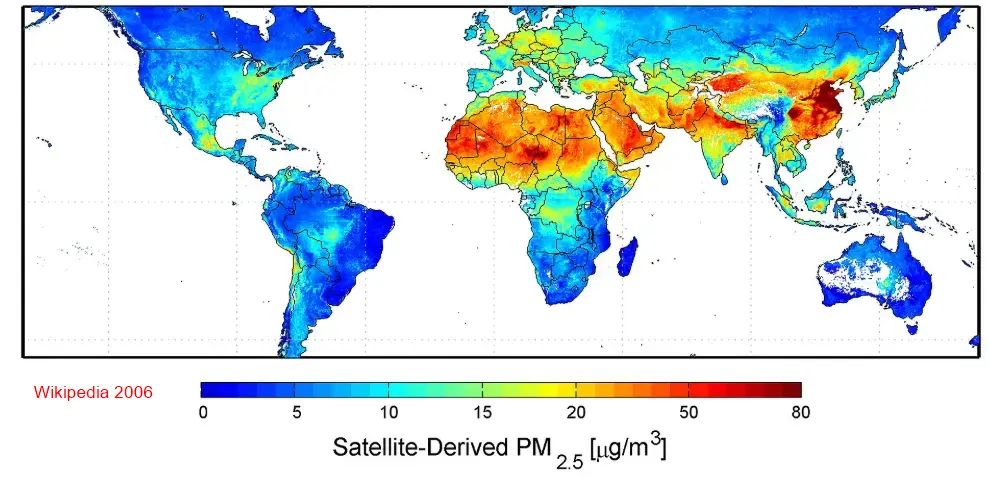
More air pollution, less vitamin D (Korea PM 2.5 in this case)
Vitamin D deficiency modifies the association between ambient PM2.5 exposure and possible sarcopenia in Korean adults: evidence from the HEXA study
Nutr Res Pract. 2026 Jun;20(3):504-520. doi: 10.4162/nrp.2026.20.3.504
Jimi Kim 1

Background/objectives: Maintaining muscular power is essential for preventing sarcopenia and ensuring optimal physical performance. Although inadequate vitamin D levels and environmental pollutants are increasingly recognized as threats to musculoskeletal integrity, their synergistic impact has not been fully established. This study examined how the vitamin D status and atmospheric contaminants independently and collectively influence the prevalence of suspected sarcopenia, defined strictly as low handgrip strength.
Subjects/methods: This cross-sectional analysis included 20,304 individuals from the Health Examinees cohort using baseline data. Vitamin D insufficiency was categorized as circulating 25-hydroxyvitamin D [25(OH)D] concentrations below 20 ng/mL. Residential address-linked data were used to estimate the annual mean exposure to nitrogen dioxide (NO2) and particulate matter (PM2.5 and PM10). Possible sarcopenia was distinguished from clinically diagnosed sarcopenia by relying solely on gender-specific low grip strength cut-offs, according to the Asian Working Group for Sarcopenia guidelines. Multivariable linear and logistic regression models were used to assess the associations, and the interaction terms were included to evaluate the effect modification according to the vitamin D status.
Results: Suboptimal vitamin D levels were widespread in the cohort (65.0%) and strongly correlated with increased pollutant exposure. After accounting for all potential confounders, elevated PM2.5, PM10, and NO2 levels were associated with reduced serum 25(OH)D levels and a greater likelihood of suspected sarcopenia. Significant interplay was detected between PM2.5 exposure and the vitamin D status, suggesting a combined effect on muscle health (P for interaction = 0.005).
Conclusion: Vitamin D deficiency and air pollution exposure are independently associated with possible sarcopenia. In particular, PM2.5 and a vitamin D deficiency exhibit a synergistic adverse association. These findings suggest that adequate vitamin D levels may be protective against pollution-associated declines in muscle strength, highlighting the need for longitudinal studies to explore integrated nutritional and environmental prevention strategies.
Related in Vitamin D Life
- Life expectancy reduced about 2 years by low Vitamin D or average air pollution
- Alzheimer's risk increased 2X if high PM2.5 air pollution
- Higher air pollution associated with more fractures and lower levels of vitamin D
- Air pollution decreases Vitamin D levels (while pregnant in this case)
- Air pollution associated with 45 percent increased risk of Vitamin D deficiency while pregnant
- Higher air pollution associated with 7 ng lower vitamin D levels
- Parkinson's Disease 25 percent more likely if air pollution (likely lower Vitamin D)
- Air pollution is bad for health and lowers Vitamin D (Global Map, cities in India and Pakistan)
Global map of PM 2.5