
Microplastics in Artery Plaque Predict a 4.5X Higher Risk of Heart Attack, Stroke, or Death
Mercola June 2026
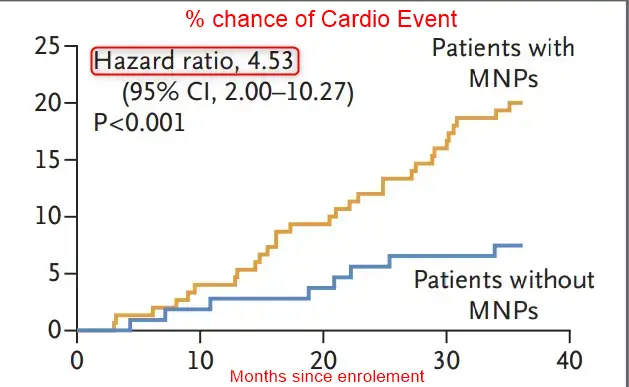
- "Researchers discovered that patients with microplastics embedded inside carotid artery plaque faced a 4.53-fold higher risk of heart attack, stroke, or death compared to patients without detectable plastics in plaque"
- "A Brain Health perspective highlighted alarming findings from prior human brain research.4 Brain tissue carried microplastic concentrations seven to 30 times higher than liver or kidney tissue — a staggering disparity, given that the brain is supposedly protected by one of the body’s most selective biological barriers."
- "Ultraprocessed foods emerged as one of the largest exposure routes — Researchers described industrial food production as a major pathway that continuously exposes people to microplastics because food repeatedly contacts plastic packaging, machinery, and storage materials during manufacturing."
Micro- and Nanoplastics as a Potential Risk Factor for Stroke: A Systematic Review - Feb 2026
J Xenobiot. 2026 Feb 14;16(1):34. doi: 10.3390/jox16010034
Jakub Kufel 1,*, Miłosz Korbaś 2, Julita Janiec 2, Zofia Pankowska 2, Marta Młynek 2, Aleksandra Gaweł 2, Adam Mitręga 2,3
Environmental pollution with micro- and nanoplastics (MNPs) is an escalating global health concern. Despite growing evidence of MNPs’ presence in the human body, their impact on cerebrovascular diseases remains poorly understood. This study aimed to systematically assess the presence of MNPs in the vascular system and their association with the risk and progression of stroke. A systematic review was conducted in accordance with PRISMA 2020 guidelines and registered in PROSPERO (CRD420251272759). PubMed, Scopus, Web of Science, and Embase databases were searched for original research articles published in the last 10 years. Five studies were included (2 human observational, 3 animal in vivo), comprising 287 patients and rodent models. Methodological quality was assessed using ROBINS-E and SYRCLE’s RoB tools. The analysis confirmed the presence of MNPs, particularly polyethylene and polyvinyl chloride, in key human pathological structures, including carotid atherosclerotic plaques and stroke thrombi. Notably, the presence of MNPs in plaques was associated with a 4.5-fold increase in the risk of major cardiovascular events and death. Animal model studies provided a biological rationale for these observations, demonstrating that MNP exposure may lead to microembolization in cerebral circulation, blood–brain barrier disruption, and exacerbated ischemic injury.
Importantly, MNP burden may reflect cumulative environmental exposure and vascular disease severity rather than a direct causal factor in stroke pathogenesis. Nevertheless, MNPs may still represent a novel, modifiable risk factor for stroke through their association with adverse vascular outcomes. Available evidence confirms their accumulation in the cardiovascular system and suggests an association with adverse clinical outcomes. Due to the limited number of studies, further standardized research on larger populations is required to establish whether a causal relationship exists.
Microplastics and Nanoplastics in Atheromas and Cardiovascular Events March 2024
N Engl J Med 2024;390:900-910 DOI: 10.1056/NEJMoa2309822
Raffaele Marfella, M.D., Ph.D., Francesco Prattichizzo, Ph.D., Celestino Sardu, M.D., Ph.D., Gianluca Fulgenzi, Ph.D., Laura Graciotti, Ph.D., Tatiana Spadoni, Ph.D., Nunzia D’Onofrio, Ph.D., +35 , and Giuseppe Paolisso,
Background:Microplastics and nanoplastics (MNPs) are emerging as a potential risk factor for cardiovascular disease in preclinical studies. Direct evidence that this risk extends to humans is lacking.
Methods:We conducted a prospective, multicenter, observational study involving patients who were undergoing carotid endarterectomy for asymptomatic carotid artery disease. The excised carotid plaque specimens were analyzed for the presence of MNPs with the use of pyrolysis–gas chromatography–mass spectrometry, stable isotope analysis, and electron microscopy. Inflammatory biomarkers were assessed with enzyme-linked immunosorbent assay and immunohistochemical assay. The primary end point was a composite of myocardial infarction, stroke, or death from any cause among patients who had evidence of MNPs in plaque as compared with patients with plaque that showed no evidence of MNPs.
Results: A total of 304 patients were enrolled in the study, and 257 completed a mean (±SD) follow-up of 33.7±6.9 months. Polyethylene was detected in carotid artery plaque of 150 patients (58.4%), with a mean level of 21.7±24.5 μg per milligram of plaque; 31 patients (12.1%) also had measurable amounts of polyvinyl chloride, with a mean level of 5.2±2.4 μg per milligram of plaque. Electron microscopy revealed visible, jagged-edged foreign particles among plaque macrophages and scattered in the external debris. Radiographic examination showed that some of these particles included chlorine. Patients in whom MNPs were detected within the atheroma were at higher risk for a primary end-point event than those in whom these substances were not detected (hazard ratio, 4.53; 95% confidence interval, 2.00 to 10.27; P<0.001).
Conclusions: In this study, patients with carotid artery plaque in which MNPs were detected had a higher risk of a composite of myocardial infarction, stroke, or death from any cause at 34 months of follow-up than those in whom MNPs were not detected. (Funded by Programmi di Ricerca Scientifica di Rilevante Interesse Nazionale and others; ClinicalTrials.gov number, NCT05900947.)
Related in Vitamin D Life
- Microplastics accumulate in all human bile, nearly 4X higher in gallstone patients - observational
- Prostate Cancers have 2.5 X more microplastics than non-tumor sections
- Microplastics and Nanoplastics associated with 8 Cancers
- Microplastics causing problems in humans, etc. (Vitamin D can help) - many studies