
Magnesium levels have dropped; most people are deficient, leading to health problems, forms, etc.
Hypomagnesemia: A Clinical and Nutritional Update
Curr Nutr Rep 15, 30 (2026). https://doi.org/10.1007/s13668-026-00745-5
Greece
Magnesium Forms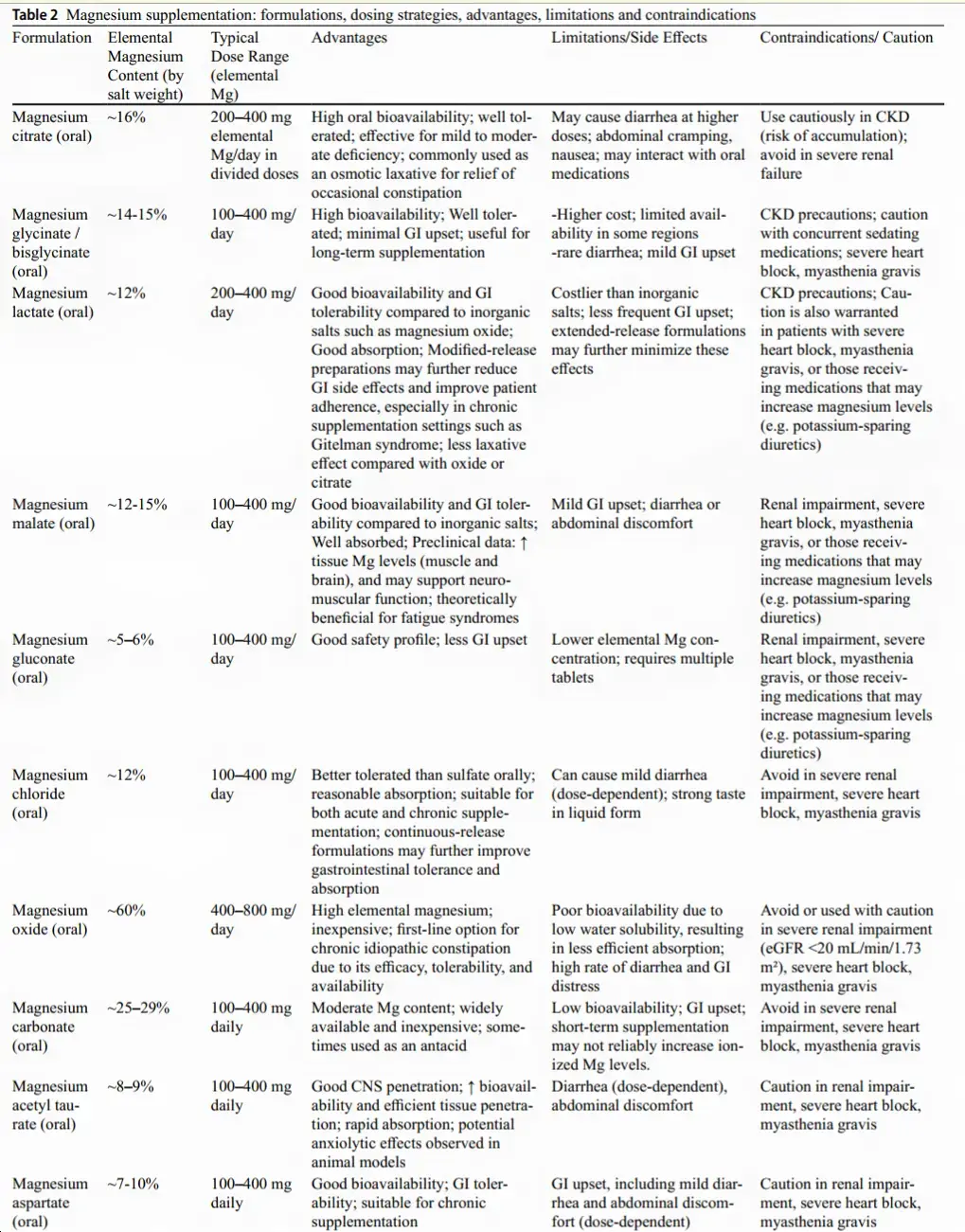
Purpose of Review
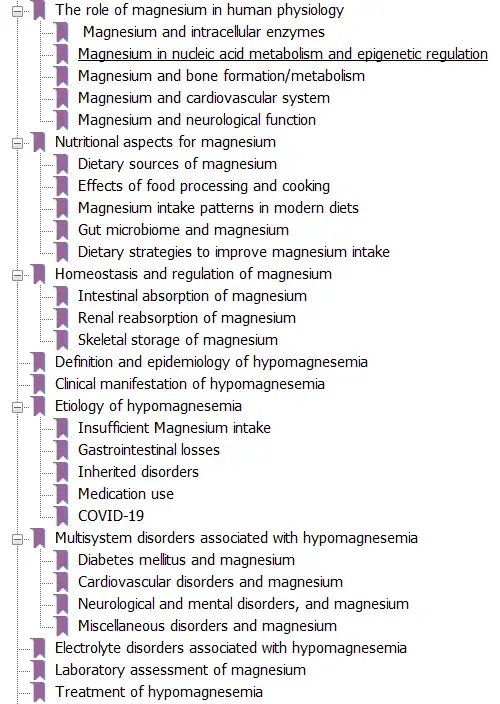
Hypomagnesemia, defined as low serum/plasma magnesium concentration, is a highly prevalent yet underrecognized electrolyte disorder with extensive clinical, metabolic, and nutritional implications. This review provides an updated synthesis of magnesium physiology, dietary determinants, homeostatic regulation, diagnostic challenges, and therapeutic strategies, with particular emphasis on recent meta-analyses and large-scale epidemiological evidence linking hypomagnesemia to multisystem disease.
Recent Findings
Accumulating evidence has shown consistent associations between low serum or dietary magnesium and increased risk of
- cardiometabolic disorders (hypertension, type 2 diabetes mellitus, metabolic syndrome, and cardiovascular disease),
- neuropsychiatric conditions (migraine, depression, cognitive impairment, and dementia),
- osteoporosis,
- immune dysregulation, and *adverse outcomes in hospitalized, critically ill, and chronic kidney disease patients.
Mechanistic studies have clarified the roles of TRPM6/7 channels, tight junction claudins, and basolateral magnesium transporters in intestinal and renal magnesium handling, elucidating pathways underlying both inherited and acquired deficiencies.
Research has also highlighted the contribution of * modern dietary patterns, * food processing, * mineral-depleted drinking water, * medication use (notably proton pump inhibitors, diuretics and chemotherapeutic agents), and* gut microbiome alterations to widespread subclinical deficiency.
Meta-analyses of RCTs indicate that magnesium supplementation confers modest but clinically relevant improvements in
- blood pressure,
- glycemic control,
- inflammatory markers,
- endothelial function,
- migraine frequency, and
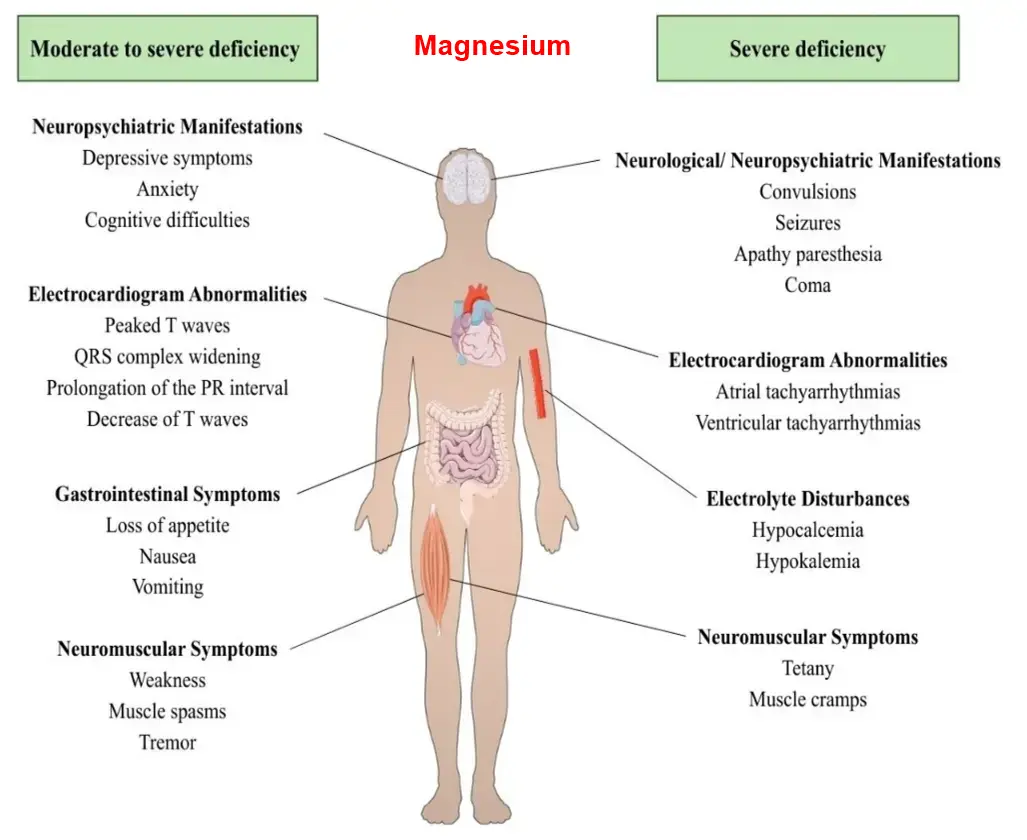
- depressive symptoms, particularly in individuals with baseline hypomagnesemia. However, serum magnesium remains an insensitive biomarker of total body magnesium status, and consensus on optimal diagnostic thresholds and replacement strategies is lacking.
Summary
Magnesium deficiency contributes to a wide spectrum of multisystem disorders, and is driven by dietary insufficiency, gastrointestinal and renal losses, medication use, chronic disease, and altered microbiome function. Meta-analytic evidence supports its role as a modifiable risk factor across cardiovascular, metabolic, neurological, skeletal, and immune disorders. Dietary modification, optimized supplementation, and correction of underlying causes of deficiency remain central to management. Future research should focus on improved diagnostic tools, personalized dosing approaches and long-term outcomes of magnesium repletion. Enhancing clinical awareness and integrating magnesium evaluation into routine care may reduce the growing burden of hypomagnesemia.
Related in Vitamin D Life
- Genes restrict Vitamin D, Vitamin K, Omega-3, Magnesium, etc.
- Diabetics more likely to die if low Magnesium (MDS)
- Magnesium Matters in health and disease – Review
- Magnesium helps muscles in more than 10 ways
- Magnesium Depletion Score predicts increased risk of various health problems
- Magnesium and Cancer - many studies
- The Science of Magnesium and Its Role in Aging and Disease - Patrick
7 Factors that Make People Likely to be Magnesium Deficient - GRH
- Low magnesium if poor kidney, poor gut, cancer, cancer drugs
- Magnesium is important to health
- Long Covid, Short Magnesium - Chambers
- Headaches decreased by Vitamin D, Magnesium etc. – Review
- Asthma is also fought by Magnesium - many studies
- Migraine headaches quickly reduced with Magnesium – Meta-analysis also Cluster headaches
Magnesium levels have dropped, Calcium increased
- Magnesium and Health Timeline (generated by AI)
- Calcium in food increased much more than Magnesium in recent decades
- Calcium to Magnesium Ratio - many studies
- Calcium-Magnesium Balance and How it Relates to Vitamin D - Sunil video Dec 2025
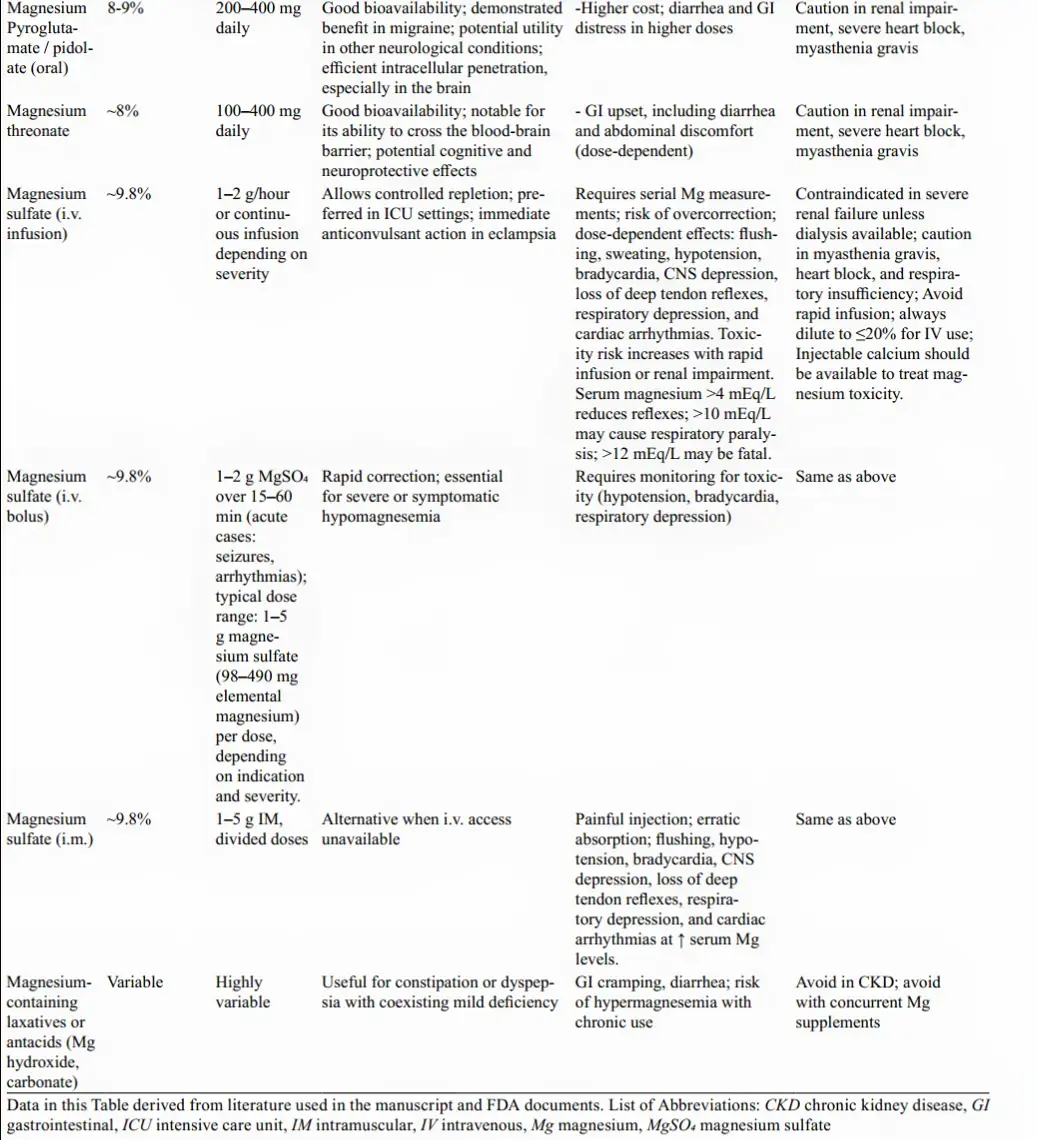
Magnesium Forms
- Magnesium: best forms for various Health Problems - Perplexity AI
- Magnesium Pidolate may be a good form to reduce headaches
- Supplements taken by the founder of Vitamin D Life
MgCl2 with water, MgCl2 in bath, Mg Citrate pills