
Liposomal Vitamin D improves Bone Density and, for the first time, Estrogen (mice)
Liposomal Vitamin D3 as A Dual Modulator of Bone Density and Estrogen Homeostasis in Postmenopausal Osteoporosis Model
Trends in Sciences, V 23, # 5, May 2026 https://doi.org/10.48048/tis.2026.12221
Indonesia
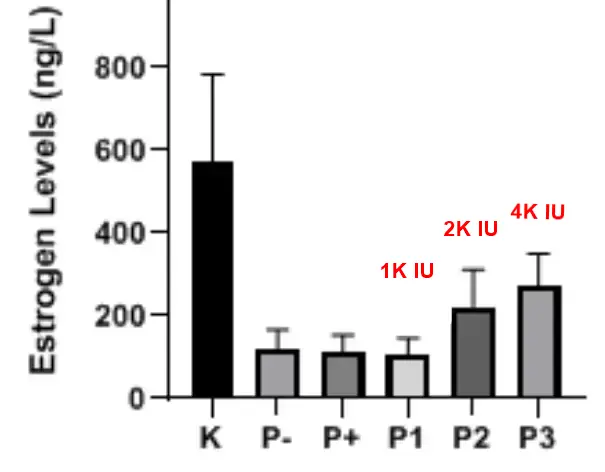
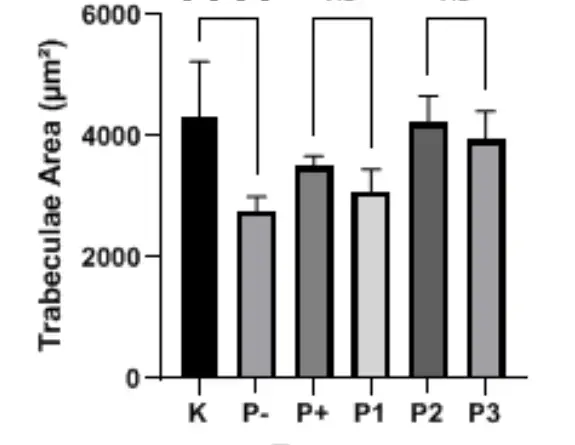
Postmenopausal osteoporosis, driven by estrogen decline, leads to significant bone loss and increased fracture risk. This study evaluated if a liposomal vitamin D3 (VD3) formulation offers superior therapeutic benefits over conventional VD3 in an ovariectomized (OVX) mouse model of postmenopause, based on the rationale that enhanced liposomal bioavailability may amplify VD3’s mechanistic role in regulating steroidogenesis and estrogen homeostasis.
Thirty-six female BALB/c mice were ovariectomized and allocated into 6 groups (n = 6/group): Control groups or treatment groups receiving conventional VD3 (2,000 IU) or liposomal VD3 (1,000, 2,000, or 4,000 IU) daily for 2 months. Serum estrogen, calcium, phosphorus, and femoral bone histomorphometry (specifically trabecular area and osteoblast, osteoclast, and osteocyte counts) were analyzed.
Liposomal VD3 at 2,000 IU and 4,000 IU doses significantly restored serum estrogen levels, an effect not seen with the conventional form. The 2000 IU liposomal dose was most effective, restoring the trabecular area to near-normal levels and was unique among the interventions in significantly increasing the osteoblast population. All VD3 treatments reduced osteoclast numbers; however, the liposomal formulation showed no superiority in elevating serum calcium compared to the standard form.
In conclusion, liposomal VD3 (2000 IU) is significantly more effective than its conventional counterpart in reversing bone loss and restoring estrogen by beneficially modulating bone cell populations. Its primary advantage lies in hormonal regulation and bone remodeling rather than mineral homeostasis, highlighting it as a promising strategy for managing postmenopausal osteoporosis.
HIGHLIGHTS
- Liposomal Vitamin D3 (2,000 IU) significantly restored serum estrogen levels in ovariectomized mice—an effect that was not achieved by the conventional formulation.
- The 2,000 IU liposomal dose was the most effective intervention for reversing bone loss, successfully restoring the femoral trabecular area to near-normal levels and being the only treatment to significantly increase the osteoblast population.
- The primary advantage of the liposomal formulation lies in its ability to regulate hormones and bone remodeling rather than acute calcium homeostasis, as it showed no superiority over the standard form in raising serum calcium levels.
- The highest liposomal dose tested (4,000 IU) indicated a potential therapeutic limit; despite its efficacy in other areas, it caused a significant decrease in osteocyte counts compared to normal controls, suggesting that dosage optimization is critical for safety.
Perhaps 154,000 IU/ day for a human
- 2,000 IU Vitamin D (assume: per kg of food) for 28 gram Mouse
- Suspect the 2,000 IU is per kg of feed, not per 28 gram of mouse
- The mouse consumes 56 IU/day
- 177 lb human, assuming the same vitamin D consumption, would consume 154,000 IU daily