
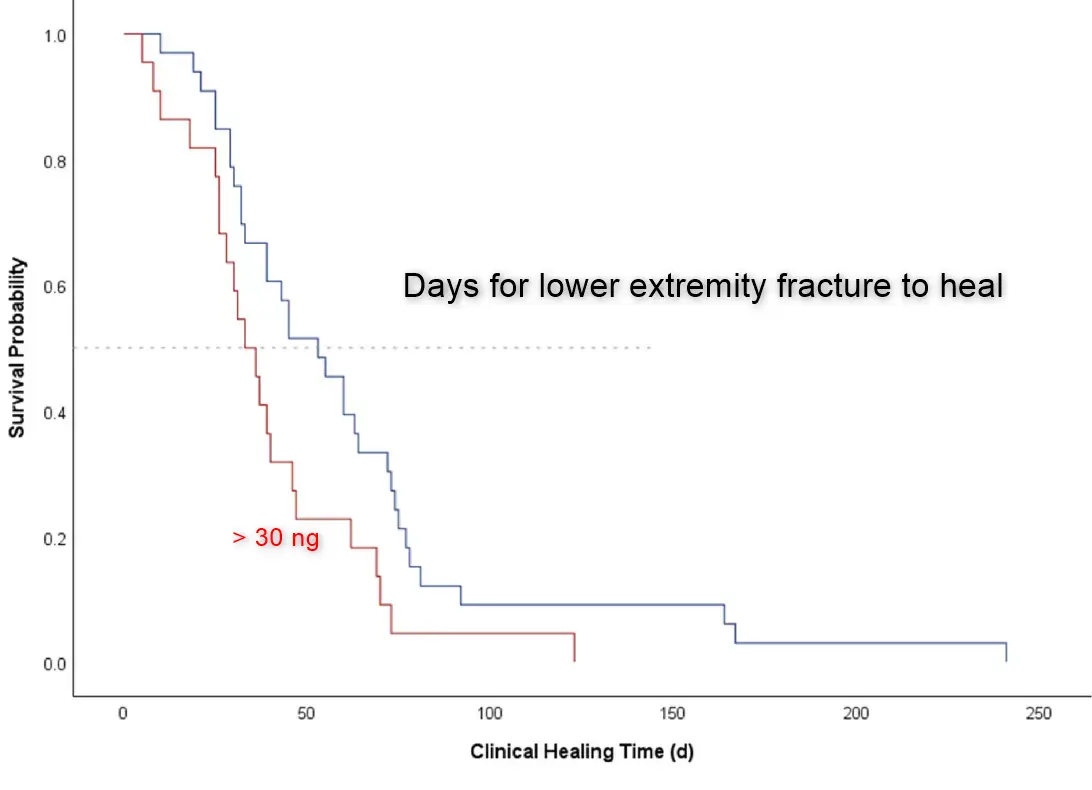
Pediatric fractures heal much faster when Vitamin D levels are > 30 ng
Low Vitamin D Levels Are Associated with Longer Healing Times in Pediatric Fracture Patients
Journal of the Pediatric Orthopaedic Society of N.A. Dec 2025 https://doi.org/10.1016/j.jposna.2025.100295
 BackgroundVitamin D plays a crucial role in bone health by aiding calcium absorption. While prior studies have explored the relationship between vitamin D and fracture prevention in adults, its impact on pediatric fracture healing remains underexplored. This study investigates whether low vitamin D levels correlate with longer healing time in pediatric fractures.
MethodsA retrospective review of patients (ages 0-17) with extremity fractures and vitamin D levels within a year of injury was conducted at a single institution in the southeastern United States from January 2015 to May 2022. Data was collected on demographics, medical history, injury specifics, treatment, outcomes and vitamin D levels and supplementation. Serum vitamin D levels greater than 30.0 ng/ml were defined as “normal” and levels at or below 29.9 ng/ml were defined as “low”.
ResultsAmong 166 patients with 186 fractures, normal vitamin D levels were observed in 38.6% of patients and low vitamin D in 61.4%. Patients with low vitamin D levels had longer clinical (p=0.019) and radiographic (p=0.001) healing times than those with normal levels. Patients with lower extremity fractures and low vitamin D had longer clinical (p=0.025) and radiographic healing times (p=0.006). Similarly, within those who required operative management, low vitamin D patients had significantly longer clinical (p=0.031) and radiographic (p=0.043) healing times.
ConclusionsOur study demonstrates that low vitamin D levels are associated with prolonged clinical and radiographic healing in pediatric patients with fractures, particularly in those with lower extremity fractures and those requiring surgery. Pediatric orthopedic surgeons should consider evaluation of vitamin D levels in these patients, as healing may be inadvertently prolonged in patients with low vitamin D levels.