
Both Fracture and Falls were reduced by more than 40 ng of Vitamin D
Revisiting the Role of Vitamin D in Fracture Prevention in the Era of Mega-TrialsEndocrinol Metab (Seoul) . 2026 Mar 4. doi: 10.3803/EnM.2029.2938
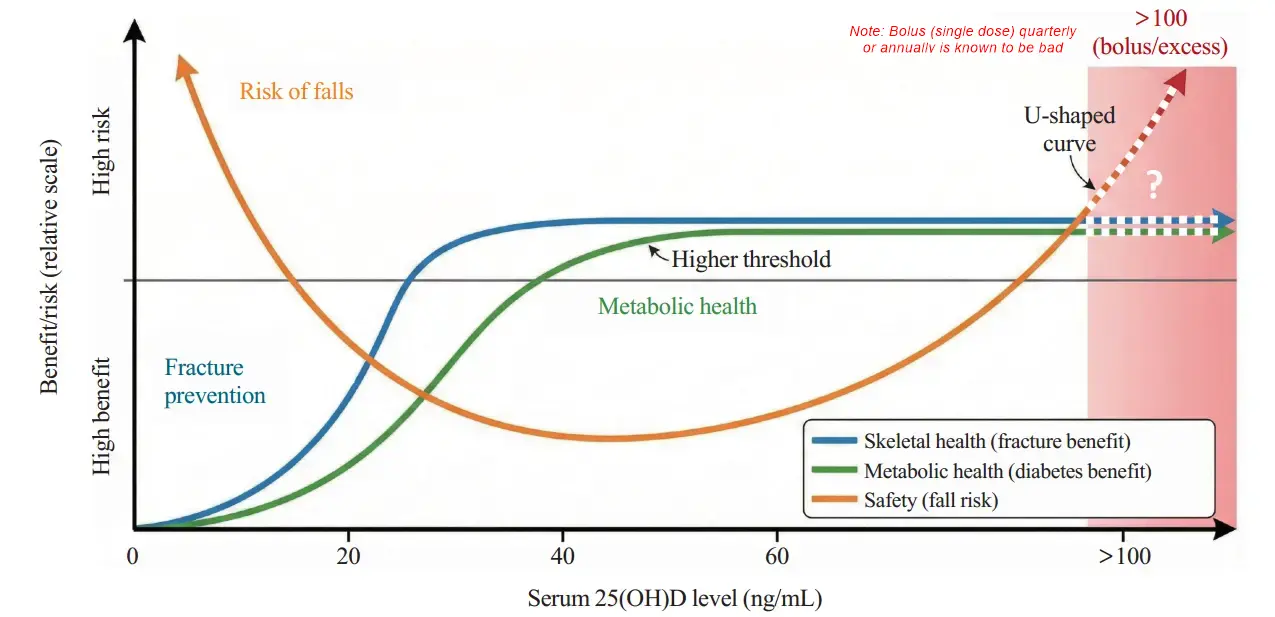
For decades, vitamin D has been a cornerstone of preventive medicine. However, recent large-scale randomized controlled trials have failed to replicate the broad benefits previously observed in epidemiological studies, particularly with respect to fracture and fall prevention in vitamin D-replete populations. Moreover, growing evidence suggesting an increased fall risk associated with highdose bolus administration has necessitated a re-evaluation of safety assumptions. This review synthesizes these discordant findings to propose a framework grounded in precision medicine. We explore the 'divergent threshold' hypothesis, whereby a serum 25-hydroxyvitamin D level of 20 to 30 ng/mL may be sufficient for skeletal health, whereas a higher threshold of 40 to 50 ng/mL appears necessary to achieve metabolic benefits, such as diabetes prevention in non-obese individuals.
Ultimately, we advocate a shift away from a 'one-size-fits-all' paradigm toward targeted strategies that maximize efficacy while minimizing the risks associated with excess supplementation.
Related in Vitamin D Life
- Hip fractures and low Vitamin D - many studies
- No increase in falls, fractures or all-cause mortality when Vitamin D is given monthly or less often– meta-analysis
- Fall prevention - Vitamin D is one of the ways - umbrella review
- Low-energy fractures in children with low vitamin D - many studies
- Falls reduced by a third if achieved 40 ng level vitamin D– RCT
- Vitamin D: Bolus is Bogus (if more than 17 days between oral doses)
- Fewer falls and fractures as vitamin D is increased – 1800 to 4000 IU
- Vitamin D INCREASED falls – 7 reasons why the study was probably invalid