
Back Pain relieved in 25,000 people with a 2-minute machine exercise every other day
Dr. Alfen confirms: The end of many backaches?
YouTube, 48 minutes, June 2026
Summary: Dr. Alfen on Back Pain and Deep Spinal Muscle Atrophy
(00:01–01:40) The host introduces the topic, sharing that he struggled with back pain for ~45 years before developing the "Wirbelsäulenwächter" (Spine Guardian) — a free 2-minute exercise routine done every other day. He presents Dr. Alfen's lecture from the Sportärztezeitung to explain the underlying science.
(02:07–04:10) Dr. Alfen, an orthopedic surgeon in Würzburg with 5,000+ endoscopic spine surgeries, explains his shift away from surgery-first thinking after suffering his own herniated disc that physiotherapy, massage, and standard treatments couldn't resolve.
(04:46–06:30) Based on 25,000+ patients and 550,000+ therapy sessions, his team identified that conventional treatments (physiotherapy, massage, acupuncture, injections, even surgery) only treat symptoms — the deep autochthonous back muscles are the real root cause of most spinal problems.
(07:29–09:13) The deep muscles are involuntary (like the heart muscle) — you cannot consciously contract them, so they require special training. Weakness in these muscles increases pressure on discs, leading to herniations, facet joint arthrosis, and spinal stenosis. Stretching cannot fix this — only specific training can.
(09:28–11:19) When pain develops from any cause (injury, posture, micro-trauma), the body begins atrophying the deep muscles first. This shows up on MRI as fatty infiltration (white areas) in the multifidus muscle — a finding radiologists typically overlook.
(12:38–14:12) Regardless of diagnosis (herniated disc, spondylolisthesis, arthrosis), the deep muscle atrophy is the underlying issue. This explains high recurrence rates after surgery (5–12% endoscopic, up to 40% open) — the cause was never addressed.
(22:20–23:18) For migraines (8 million sufferers in Germany), stabilizing the deep cervical muscles reportedly provides relief for 50–70% of patients, including teenagers on triptans for years.
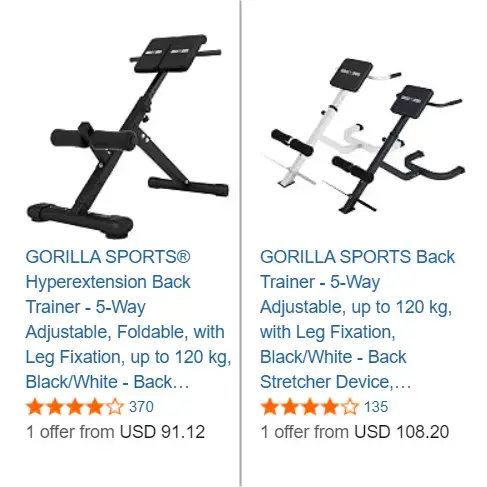
(25:42–27:22) The host explains his simpler version: sit upright on a chair for 60–120 seconds, every other day, for 4 weeks. Then progress to standing/45° forward position using a hyperextension device (€50+) or a strap in a doorframe. Most see results within weeks.
(28:45–30:30) Results: ~50% improvement in spinal stenosis (by improving stability, not widening the canal), and 96% success with herniated discs — when deep muscles strengthen, pressure on the disc nucleus drops, allowing the body to reabsorb the herniation.
(39:37–40:42) Concerning trend: 20%+ of his patients are now under 30, including herniated discs in 11–13-year-olds, with rising migraine cases in teens. He advocates "spine first" thinking and preventive screening, ideally starting in schools.
(45:13–46:18) The host's practical recommendation: adequate hydration, vitamin D levels of 60–100 ng/mL, and a simple device (€50 suffices) used 2 minutes every other day. No specialist appointment needed.
Related in Vitamin D Life
Aug 2026 Book in German
Amazon suggests many things, like the following
Transcript
- (00:01) I've known endless back pain for years, even decades. It's been a constant companion for me personally for about 45 years, and professionally for over 30 years, until about 5 or 6 years ago when it stopped. I experimented until I found a way to manage my own back pain, and consequently, the persistent or recurring back pain of my patients, leading me to develop the Spine Guardian
- (00:42). It's a complete, free exercise sequence that you do for 2 minutes every two days to focus on your back, and then, let's say, hopefully start to heal. The comments under my videos about the Spine Guardian speak for themselves. Exactly.
- (01:09) Dr. Alfen explains the philosophy behind it, the idea behind what happens in this Spine Guardian. Brilliant." And so, let's take a look at this video, which he's presenting on the YouTube channel of the sports medicine journal. And I'll also add a few comments from time to time.
- (01:40) Um, so if you have recurring back pain, or even constant pain, then it's time to say goodbye to that back pain in an incredibly simple, uncomplicated, and quite effective way. So, let's just get started. Yes, very good afternoon, my dear colleagues.
- (02:07) Yes, my topic today is the accumulation of fat in the deep back muscles, therapy, and prevention. And yes, I've had a private orthopedic practice in Würzburg since 2002, and before that, as a senior surgeon at the Alpha Clinic in Munich, I learned endoscopic spinal surgery and then spread it to various countries, as you can see, here in Europe, in the USA, and in China.
- (02:40) Back then, I thought—and that's how we orthopedic surgeons were kind of taught during our studies—that you can and should operate on pretty much anything. Like with a car, you replace a part, for example, the intervertebral discs with disc prostheses or disc surgery, removing pieces and then everything's fine.
- (03:02) And that's why I started out in neurosurgery for two years, quite traditionally, and then switched to orthopedics. There, I wanted to operate on the spine, so I learned the open procedures and later endoscopy. At the Alpak Clinic with Dr. Hookland, who was actually the inventor, but he didn't want to spread this therapy or this operation, and I was his deputy, which meant I could introduce it in different countries. I thought then that
- (03:30) it was the ultimate solution.That the minimally invasive surgeries are better than open surgery, I would say. That's still the case today. Um, I've now performed over 5,000 surgeries. But um, I'm finally, actually, ultimately, surgery whenever possible.
- (03:51) So, I've had a personal journey in this area. I went through these various stages to introduce the surgeries. I also had my own clinic for years, a private clinic where I performed the surgeries. Then I got a herniated disc myself.
- (04:10) Um, I thought I knew everything about it. Physiotherapy, physical therapy, massages, I did all those things, and ultimately, I wasn't pain-free. But then I came across a procedure, a therapy, that changed my whole life, including my surgical approach and how to actually deal with back problems.
- (04:29) And I'd like to explain this to you in more detail today, because everything we're looking at here is something I didn't know before either. This connection with the deep muscles. We've now conducted over 550,000 therapy sessions and treated over 25,000 patients.
- (04:46) We've tracked all of them, analyzed them scientifically, and our research team is a world leader in muscle research and back therapy research. I'd like to explain these connections to you because I didn't know this before either. We're currently facing a huge problem, not only with the cervical spine and the lumbar spine, but also with the lumbar-cervical spine.
- (05:09) You can see here at 60 degrees how much weight you have in your neck. It's like putting a case of water on your neck; that's how strong the pressure is. And that, of course, changes the spine. It leads to instability in the spine. This irritates cranial nerves there, and we're seeing an extreme increase in headaches, migraines, and tinnitus in children, which are related to instability of the cervical spine.
- (05:35) Regarding the whole situation with the muscles, um, we couldn't determine why the deep muscles atrophy so much or why, for example, high-performance athletes can still have a significant deficit in deep muscle strength. And that's why, in 2007, we started to examine this entire system of muscles in the back in detail.
- (05:58) And um, it's fundamental, and these are all things I didn't know before. So, just like you, I've probably tried many other therapies on the spine, but I have to say, health insurance, physiotherapy, massage, empathy, acupuncture, sling therapy, psychosomatic therapy, injections, yoga, shockwave therapy, um, drug therapy, PRS, and even surgery are things...which have a very good effect on the symptoms and improve them, and are not bad in any way. But, over the years
- (06:30), we have found that the deep, intrinsic back muscles play a special role, and these need to be examined closely. And I believe I can now say that it is truly the cause of the vast majority of changes in the spine. And if you agree, thank you.
- (06:47) Exactly what I'm saying, exactly my observation. Whether you have a herniated disc, a slipped disc, or osteoarthritis of the joints, the reason I can be so sure is because I've been observing this for years. That is, regardless of the diagnosis with which the patient comes for treatment. So, if the patient performs this sequence of exercises in such a way that these deep back muscles awaken from their slumber, the vast majority of back problems disappear, and one becomes resilient again
- (07:29). That's fantastic. Watch it. Look at the surface and deep muscles of the back. The back is the only system that actually has a two-layered structure. The biceps or the thigh, for example, are a homogeneous form. That's not the case with the back.
- (07:51) And that's why it needs to be considered in a special way. Here in the middle, you can see the deep back muscles, which are involuntary. You can't consciously contract them. If I ask you to contract your biceps, for example, it's no problem. But if I ask you to contract the deep back muscles, it doesn't work.
- (08:07) And that's why you have to train these small, deep muscles completely differently than all the other muscles in the body. The deep muscles are also independent of will because otherwise, humans wouldn't be able to stand upright. So, we have a special requirement for these muscles. It's the same with the heart muscle.
- (08:23) We can't consciously contract that either, and that's a big difference. But these deep muscles also have, um, different layers. So, it's about tension and, um, yes, compression and firmness of the spine. These muscles have specific requirements. If these small muscles aren't firm enough, the pressure on the intervertebral discs increases.
- (08:47) This leads to disc changes. If these small muscles aren't firm enough, then, um, disc degeneration occurs, leading to spondyloarthrosis, i.e., degenerative changes at the facet joints, and of course, spinal stenosis. So, ossification of the ligamentous fuzz is also a consequence of, um, instability in the spine. And you can't stretch that away, whether you want to or not, you can't stretch it away, you can only train it away.
- (09:13) A musculature. Normally, it's like this, and I'm always asked about this, how is the connection?Why does this muscle mass even atrophy? Normally, this muscle doesn't need any special training or special Dr. Alfen or Powersbin machines.
- (09:28) Normally, walking and standing are enough training for these muscles. However, if—and this is what we have really researched in detail over the last 15 years—a pain stimulus develops, and this can be multifactorial. It could be a congenital condition, microskeletal disorders, an accident, an acceleration trauma, or even a minor trauma sustained while gardening.
- (09:51) So, if the patient reaches into their neck and back and experiences pain there occasionally, then the body begins to atrophy the deep muscles. And the latest studies from Denmark, and also, um, I think from, uh, yes, from the USA, anyway, we also have a collaboration with the Swedish Union Yio, for example
- (10:12), clearly show that the deep muscles always deteriorate first. Even as we get older, it's always the deep back muscles that deteriorate first. And here you can see the deterioration of the deep muscles in the images. Right here. This is fatty degeneration of the deep muscles. This is a normal cross-sectional T2-weighted MRI image.
- (10:32) You can see that the deep multifidus muscle is very well defined here. The erectospine muscle is also well defined here on the outside. The erectospine muscle on the outside is fine, but the multifidus group is severely degenerated. You will see this pattern of fatty degeneration in all patients where you examine the MRI scans.
- (10:51) Radiologists rarely describe this, which is a shame because it's obviously one of the main causes. In the next image, you can see the muscle atrophy, fatty infiltration, meaning fat cells running through the cross-section. Often, MRI or CT scans focus more on passive structures, such as the joint surfaces, bones, ligaments, and capsules.
- (11:19) But in cases of back pain, the quality of the deep back muscles is very rarely assessed in the MRI report. In this patient, the pressure is extremely high, and as a result, the pressure on the intervertebral discs, facet joints, and especially the spinal canal is very great. You can see here, for example
- (11:41), that it's only on the right, on the left, on the right side, right? But when you look at it, it's the right side. And here we have fluid accumulation in the facet joints. Here, the right facet joint is already quite damaged, because this deep muscle is particularly weak. You can see it very clearly on one side.
- (12:01) This patient is, of course, a prime example. So,This atrophy of the deep muscles plays a crucial role, and it's very clearly visible in the MRI scan. It's also a helpful tool for us autosurgeons to explain things to patients. Look, the test on the machines shows that you have muscle atrophy.
- (12:20) Your pain score indicates a problem, and especially when you look at the MRI, you can see the atrophy of the deep muscles. Here it is again. That means these small muscles, specifically the deep autonomic muscles, have atrophied, and in the T2-weighted image, they appear as a white area.
- (12:38) So, this is the fat deposit here, and that's why a herniated disc develops. That's very good, Doctor. So, the herniated disc develops due to inactive muscles. The question isn't which came first, the chicken or the egg? But first, the muscles lose their functionality, and then all the other structures in that area suffer as a result.
- (13:10) Then the problem arises, and that's why it almost always helps, so to speak, to rebuild these muscles back to their pre-school strength. Elementary school, middle school, high school, university entrance exams. That means getting them back to a state where they can properly provide our body with stability over the next few months, and that works.
- (13:32) In connection, the deep muscles aren't properly tightened, and that's why the herniated disc occurs. If we now treat it with medication or only remove the herniation, the underlying cause, namely the atrophy of the deep muscles, isn't addressed, and that's why we have a relatively high recurrence rate.
- (13:48) Even with endoscopy, we have somewhat fewer recurrences, but still, your physiotherapist, osteopath, or alternative practitioner can't just push, pull, manipulate, massage, or whatever else you see. It's impossible. That's why you have to keep going back. Are we talking about 5 to 12%? With microlamtomy or open procedures, we're talking up to 40%.
- (14:12) Do the patients experience another recurrence at the same location? And that's naturally due to the fact that the underlying cause—and we didn't know this beforehand—namely, the atrophy of the deep muscles, simply wasn't properly addressed. Post-operatively, all the patients I treated for back problems more than 5 years ago—I'm sorry, I didn't know this beforehand either.
- (14:38) Or pre-operatively, so also for the surgeons. Um, I'm also a surgeon, um, it's like this: we can simply improve our results. You know, sometimes our patients come to us, and we say, okay, we'll do another MRI, really take another look at the situation, and then we see from the MRIs that everything is fine.
- (15:01) The patient still has symptoms, and we don't know what to do with him. He does kinesiology, physiotherapy, and lots of exercises. Despite this, the pain doesn't really go away. A pressure sensation develops again, even though the herniated disc has been surgically removed, but a recurrence can occur there at some point.
- (15:19) And the scar tissue that forms during open surgeries due to the bone cut also exerts a certain amount of pressure, which, if the deep muscles are weak, can then press on the nerve. So, um, we have many studies here that really confirm this. We've done a lot of research on this.
- (15:36) In recent years, many universities have been supporting our research, showing that the multifidus muscle plays a particularly important role here, and also in chronic pain. In both men and women, weak autonomic back muscles clearly increase the risk of injury, herniated discs, and other degenerative changes.
- (16:05) So, we need to focus much more on these muscles. Even if you go to the gym three times a week, or train at the sports club or community center, that's not the right kind of training. It's better to do that than to do nothing. The training you do at your gym is usually...
- (16:32) Unless it's as the doctor is about to explain, and as I'm about to explain, then you shouldn't have back pain much longer. That's the problem. So it's good that you're training. Very, very good. But you're not retraining your deep, intrinsic back muscles, those little ones back here, for what they're for.
- (5:06 PM) Unfortunately, we've listed all the therapies here, or at least some of them, and I want to make it very clear that we have physiotherapy and osteopathy in-house, which we combine. Um, but we do 18 to 25 sessions of medical strengthening therapy on the machines and then combine that with five sessions of osteopathy or manual therapy to get those muscles moving, to improve mobility.
- (5:33 PM) But the root cause of the therapy itself is this deep muscle. That means, unfortunately, all these therapies won't provide lasting pain relief. Exactly. That's why you don't need a special appointment with me. I get emails and calls every day at the practice asking for an appointment.
- (17:54) No, even if you've had back pain for 100 years and have been everywhere, this is the therapy, the path, the one for you. You don't need me for that. Absolutely not. You need this concept of spinal guardians along with sufficient fluid intake.Absolutely essential, and a vitamin D level between 60 and 100 nanograms per Miller.
- (18:19) Then it almost always works. Um, we often achieve good results there for a certain period of time, but um, it absolutely needs these deep autotonic muscles, and I am a huge fan of combinations of these therapies, whether that is surgically removing the herniated disc, or perhaps trying to relieve the pressure on the disc again with the machines, and then you can certainly add all these therapies listed here, um, yes, in addition, um
- (18:53), but without the deep muscles, we will not, in our experience, um, achieve lasting pain relief. Yes. Yes, we then developed the Power Spine concept, which evolved from Jones' MX machines from 1989. That was a person who, in Gainsvin Fuda, manufactured these first machines. Back then, he placed them in the muscles and intervertebral discs and observed which type of fixation reached the deep muscles of the back. Based on this, he developed the Net X
- (19:27) machines, which Kisa later used. And the basic semi-reclined position is particularly important for this therapy. You then push backwards against resistance. We'll see that in more detail shortly. And that was the basis for our machines and also for our further technical developments.
- (19:47) The Powerpine system doesn't consist of just two machines and nothing else. It's actually more about the therapy and also the software, which we've developed from the last 20 years and data. We've installed over 300 diagnoses in this software. That means if you enter the patient's height, weight, age, and gender, the software tells you exactly how to train them.
- (20:13) So, therapy control is actually one of the main features, or in my case, it's much, much simpler. That doesn't mean my concept is worse or better. It's similar, except it doesn't cost you anything, unless you buy a device like that after four weeks, for around €50, €60 to €180, or a Zorgurt, a ratchet strap from the hardware store, that's perfectly sufficient, and then you should see how you're doing in three months.
- (20:51) But that's perfectly legitimate, of course. Sure, there are differences compared to the earlier Mix machines, and we've also digitized the whole system because we couldn't really do proper research with the machines if the data wasn't always consistent. That means the seat has to be the same, the patient's fixation has to be the same, the range of motion always has to be precisely set, and for a 16-year-old migraine patient with cervical spine issues, that's, um, 58
- (21:22 kg weighs differently than a lady who is 92, has mild osteoporosis, and has had two vertebral body fusions or a fusion. These patients especially need deep stabilization. With osteoporosis, we've also developed considerable expertise over the years with my scientific team.
- (21:45) And this software is the basis for the therapy. Now, let's explain how the machine works, or how the isolation takes place. We start with the cervical spine. Yes, the patient is fixed in place; the upper and lower body are really screwed down. The fixation of the upper body and the very controlled backward movement of the cervical spine strengthen the extensors.
- (22:20) The range of motion is significantly restricted, and we can adjust it depending on the patient. Especially with migraines, we know that instabilities in the cervical spine between C0 and C3 trigger migraines in a great many patients. We now have 8 million migraine patients in Germany—just imagine that!
- (22:48) And from our experience, we know that we can make 50 to 60, even up to 70% of migraine patients pain-free by stabilizing the deep cervical spine muscles, which is an immensely large number. I don't want to say that this is the case for all migraine or headache patients, but if the deep muscles have never been trained, then migraine patients, headache patients, are missing a crucial building block, which is why they might simply not be able to become permanently pain-free. We have
- (23:18) young patients, who are 15, who have been taking triptans for 6 years already. As a fellow headache sufferer, I can wholeheartedly recommend my "Exercise of the Gods," the 5-minute "Gods Exercise." It should reach one million clicks in the next 10 days.
- (23:42) I made the first video about this four years ago; it was a bit long, 28 minutes, I think, until my son said two years ago, "Dad, you have to make a shorter version." And then I made the "Exercise of the Gods" again for all head and neck sufferers, and it's a very simple exercise, no equipment required, no need to do anything yourself. The comments speak for themselves, and I think 99.7% are thumbs up. But this one is great too, and they do 5 sessions with us and are already halfway
- (24:21) pain-free and then completely pain-free. You can't even imagine the emotions I sometimes experience here. Dear colleagues, I can only hope that you also have such experiences and that we don't have to resort to therapies where we simply cannot predict the outcome.With these machines and our current therapy protocols, we might not end up with a satisfied patient.
- (24:44) We want to heal the patients, but we also need the skills to guide them to a pain-free state. Just the fact that we perform measurements, core biopsies, CT scans, perhaps even spinal measurements, and so on, ultimately we need to get from these measurement procedures—and there you can see again how the deep muscles are stimulated.
- (25:05) Then we simply need a therapy that ultimately provides pain relief. Yes, a therapy that provides significant pain relief. We have the ability to cope and, above all, the resilience to move around so that you, as a person, are able to do things again without having to be afraid ten times when you bend over, without not knowing how you'll get up again, or so that you can support your grandchild or your grandmother or whoever, or carry a case of water or a case of beer, or even play tennis again or Batman.
- (25:42) Or whatever, um, postural problems, those are all, um, yes, um, diagnoses for which this therapy is suitable. Actually, one has to say, what isn't it suitable for? Because it's actually suitable for everything. I would tell all patients, even those with acute herniated discs, the ones with the really severe pain that come into the practice, um, doctor, I can hardly stand anymore.
- (26:09) We still put them in the machine during the acute phase. We also have a therapy concept for that, because the blood flow in that deep region alone, which is the first time, is exactly the same. I do the same thing, only with me, nobody is put in a machine; instead, they sit on a chair. And you simply sit with your spine straight for 60 to 120 seconds, and this brings those deep, intrinsic back muscles back into action. And that's only for one to two minutes. Tomorrow
- (26:49) a break, the day after tomorrow another break, and then again in four days, and this program is carried out for four weeks. So, only once a day, and after four weeks, the duration is increased by doing it standing up, or at a 45° angle forward. You can either use a hyperextension machine, which you can get for around €50, or strap a belt around your front and stand diagonally in a doorway, for example. And then it continues like this.
- (27:22) 89 months isn't usually necessary. Often, just a few weeks are enough for the pain to disappear. The point is that you're not just standing statically, but that you're teaching your entire body to function again. And that's what makes it so successful. I think they've never trained these deep muscles in years.
- (27:47) Does that lead to the removal of pain cells and an improvement?Where it's really difficult is when they have tumors, so, um, in the vertebral bodies. There, I would be very careful, of course, because of the risk of fractures, or in cases of severe osteoporosis. But even there, those might be contraindications, or if they have a tumor in the carotid artery of the cervical spine, or something like that, or things that aren't entirely clear, then you have to be careful, of course.
- (28:15) But we always start cautiously with these patients, and even with osteoporosis or, um, carcinoma patients, a guided, gentle medical strengthening therapy is actually the goal, because it strengthens the immune system, because it strengthens the patients' psyche. Many of these patients are then no longer touched and told, okay, we have, um, yes, tumors in the bones, and therefore we can't do any physical therapy or anything like that anymore. There, too, we have a regimen with
- (28:45) very gentle therapy. So, almost anything is possible, and almost anything can be treated with therapy. What are the results? We've seen a large number of improvements even with nonspecific back pain. Even with spinal stenosis, as you can see here, we've seen an improvement in over 50% of cases. These are patients who have a slant-like deformity, you know, who bend forward, or who have claudication.
- (29:21) Why does the therapy help then? It's not that we widen the canal through the procedure, but rather we improve stability. That is, the main problem with many stenoses is not the narrowing itself, but the additional displacement of the spine, which further narrows the diameter, and that's why the spinal stenosis becomes increasingly symptomatic.
- (29:45) And we certainly have 86-year-old patients who had a walking distance of 200 meters and then suddenly can walk 1-2 kilometers again, and then, from an internal medicine perspective, might not be able to have surgery. And that's why it's a blessing for them when they achieve very good results with conservative therapy.
- (30:05) But with all herniated discs, we're at 96%. The thing is, when the pressure on the inner nucleus isn't so great anymore—the outer annulus fibrosus is the nucleus that has pushed through, a very water-rich nucleus is pressing on the nerve root. The body can break down this piece, but only if the pressure on the inner nucleus isn't so great anymore, and this is primarily ensured by the multifidus group, which we can only access in isolation.
- (30:30) That's simply a fact that can't be ignored anymore. And if these deep muscles are tight and we continue to build them up, then the body can completely break them down. That's what happened with my band injury.Um, I actually experienced the whole thing painfully myself back in 2007, and that's where all the research came from.
- (30:48) I've just written a book, um, the back surgeon who couldn't operate on himself. I've also written a book. I've also written a book. The Spine Guardian will be published on August 27, 2026, and deals precisely with this principle. In it, where I'm actually a patient for half the book, I clarify why um, I can now understand better and better what the patients go through and why they can't get out of this trap, and what a blessing it is to offer such a therapy
- (31:21) as a doctor, which shows such um, great success. Of course, um, over the years we have continuously expanded our scientific program. We have Dr. Spang, a tissue researcher from the uh, University of Sweden. Um, here, our PhDs get bronze, our Bachelor's graduates get silver, our Master's graduates get gold.
- (31:42) So, we've developed a real scientific board with the Medical Strangers, that's what they call themselves. And, um, here you see the only results: extension strength correlates with pain reduction, and so on. So, this and here above, we see this movement again, that the deep muscles are reached because the lower body is really properly stabilized.
- (32:06) And there are many machines where you push backward in some way, but, um, this is a really sophisticated system. These machines have 2,000 individual parts, and we've really put a lot of science and technology into them, and it's really great, but it's quite amazing how many individual parts you actually need just for a chair that seems to work this way.
- (32:33) Let me put this carefully. So, if you have the opportunity to experience this principle with Dr. Alfen or in gyms, definitely do it. If you don't have that opportunity, use the Spine Guardian I developed. Therefore, you simply can't compare it to a normal, um, fitness machine.
- (32:54) Here's another, um, operation. Here I removed the pelvic disc herniation. With endoscopy, you don't have to make a bone cut here. So, you don't have to go back over the lamina or the hemiplegia, as was done previously. That would mean we'd have to remove quite a lot here.
- (33:13) With open procedures, with endoscopy, you approach the patient 12 cm from the midline with the tube system and remove the herniation there, and then we can see it. Um, this is, um, postoperatively. You don't see an access route, we have no scarring because, of course, we don't have that bone cut.
- (33:35) So, transformal endoscopic surgery is also a blessing.Unfortunately, it hasn't caught on in Germany either. Why is that? Well, in Germany we have five or six colleagues who do it. I've now supervised over 500 surgeons worldwide. In China and, um, in the USA, it's actually become a standard procedure.
- (33:56) Um, what's difficult is the learning curve. We need 20 or 30 procedures before you can do it yourself. And that's perhaps the main obstacle, the reason why colleagues might not do endoscopy. It's not exactly easy, but once you do it, or I've been doing it for 20 years, it's naturally a procedure like all endoscopic procedures, which has very, very significant advantages.
- (34:19) Although I don't want to say that open surgery is somehow bad, but we still have the disadvantage of the deep muscles, and if these people, or the patients, aren't properly cared for before and after with, um, proper roughening of the deep muscles, then they simply can't become pain-free. Yes, so this is with surgery, and then we have a patient here where we see the same phenomenon without surgery.
- (34:43) So, the body is already here, you can also see the atrophy of the deep muscles. Here it doesn't look so spectacular that it's much less. The thing is, we've now developed software where you can measure the areas of fatty infiltration in the deep muscles, and we see that after training, this correlates with the reduction and freedom from pain in the patients.
- (35:03) And you can see here that the body is quite capable of completely breaking down this tissue. And of course, sometimes these are also incidental findings, dear colleagues, you know that when you sometimes look at the MRIs, you see that the patient hasn't done anything major, comes back six months later, and the problem is gone.
- (35:23) That happens quite often, but here it's a deliberate, targeted process to break it down. And when this deep muscle, which is still fatty here—you can always see it very clearly—is built up, then the body can also break down such tissue. Yes, that's actually the body's self-healing power. And if the patients haven't had surgery yet and we have little nerve tissue here, then the success rates in cases of herniated discs are very high.
- (35:47) I hardly ever operate on young patients anymore. So, the indication for surgery is bladder and bowel dysfunction, persistent pain over a long period, or foot drop. Anything else, I wouldn't necessarily operate on, regardless of what I see in the MRI. We also do muscle research. Here, for example, we see
- (36:09) the multifidus muscle in the ultrasound. It doesn't look so spectacular,But we have now developed a procedure, and we have also written a doctoral thesis on it—a combined medical doctoral thesis, in fact—and you can see that the swelling is more pronounced here on the left side of the muscle; there are still fat deposits, while here the fat deposits are less pronounced.
- (36:29) For us, it's spectacular. For someone who isn't familiar with this, it might be difficult to understand, but nevertheless, you can see the fatty infiltration of the muscle in the ultrasound. And we also see that, um, this deep muscle doesn't swell during physiotherapy. For example, after PowerPint therapy, we can have the patients lie down and perform an ultrasound.
- (36:51) We have developed a special chart where you can see how this muscle swells, and we see that with other procedures, the muscle simply doesn't swell. So, it's not meant to be a bashing of other therapies, but we really want to prove, or show, or can prove how effective isolating these muscles is and why these muscles are so important and play such a big role.
- (37:16) Yes, they are now, or they have probably been, for years, specialists in this field. If you look at this here, you can see a large herniated disc. This is what's left of the mylon. And here, down here, we see the total fatty infiltration of the deep muscles. This doesn't always have to extend all the way up here.
- (37:36) So, the patient has significant atrophy here; this is subcutaneous fatty tissue. This is the superficial layer. And, um, this patient came to my practice in 2013, I think, and said: "Yes, Mr. Alfen, you're a world leader in endoscopy. I have a championship coming up soon, um, I came up the stairs on crutches, and I absolutely have to play there.
- (37:59)" Um, and then I did, but that's in four weeks. Even if I operate now, it will probably be difficult. And, um, we didn't fix him. Um, and, um, let's see what he, uh, has to say about all this. That was in June 2013, during the off-season.
- (38:23) I had terrible back pain, two herniated discs, so I drove from Lemgo to Würzburg to Docfen. I trained there for three and a half weeks, using the machine three times a week. Then I flew to Pegen in China for the Lemgo training camp, and since it was a high-intensity workout, I was able to train pain-free. And yes, I believe that without this treatment, it wouldn't have been possible to avoid surgery. And when you consider that I come here once a month and train for two minutes, it's just amazing.
- (38:52) Yes, and that's really how it is. He comes once a month. It's a high-impact sport, and when you see how tight that myocardial infarction was there, it's almost unimaginable. The fact that the man had surgery is, well, he's set a record, because he was still playing handball at 42.
- (39:12) He's now the goalkeeping coach for the national handball team, and handball is, of course, a high-impact sport, so you can imagine what that means when he becomes pain-free again without surgery. And he's not the only high-performance athlete. We have hundreds of examples that are similar to his.
- (39:37) I believe that the basis for all changes to the spine is always related to the deep back muscles, and we're seeing a dramatic development, especially in the future. We used to have, I see, between 100 and 150 patients a day doing this machine training.
- (39:57) We see new patients a day, eight to ten new patients. Um, and we see that most, um, yes, or very many now, in fact over 20%, are under 30 years old. So, we have herniated discs in 11- and 12-year-olds, we have cervical disc herniations in 13-year-olds, we have a lot of migraine patients between 15 and 22, uh, more girls than boys.
- (40:24) Um, we have young national soccer players, 16 years old, who have spondilolysis, or where the facet joint has detached a bit because the deep muscles weren't properly tightened, and as a result, um, we have inflammation of the facet joints, um, where we didn't even know where it came from.
- (40:42) Then we saw it in the MRI scan. So, it's a dramatic development also in the area of, um, migraines, headaches, tinnitus. I believe that a lot of, um, pain is related to the spine. We also have close ties with Professor Welsch, who is the team doctor for HSV and does excellent research in Eppendorf.
- (41:06) And there we see that the activation of the muscles probably happens too late, even in the case of muscle injuries among football players. So that's still a vast field. You know that some players sometimes have radiating pain in their chest muscles and then have catheters inserted, even though the spine, even though the heart, is fine, and stomach aches can also be related to the spinal nerves in the back.
- (41:30) So spine first, you should always optimize these deep muscles if you don't know exactly which diagnosis is involved or why you can't quite arrive at the diagnosis. We also sometimes have unilateral ankle pain that simply hurts in isolation, which is related to the ISAS.
- (41:50) So, there are many possibilities there, and that's why I believe this therapy will also be a great benefit to everyone. These are our locations,which we currently have. In the USA, when we get a new one soon, and also in Guidhara, Mexico, in Mexico City, when we get a new location.
- (42:11) We have all these collaborations, wonderful collaborations with the universities. I have a large team behind me. I myself have, um, three doctors who, um, co-supervise the therapy. I have many scientists who are working intensively on, um, this muscle research. Since 2017, I've actually been trying to get this included in the catalog of, um, the, well, statutory health insurance benefits.
- (42:37) That was impossible. Um, I'm president of the Society for Strengthening. It's actually unthinkable. This is something that is also proven by bachelor's theses, master's theses, doctoral dissertations, that there is a system that demonstrably works for back pain, and does so sustainably, and that it hasn't been covered by statutory health insurance.
- (43:09) and still isn't. That's unbelievable. Nevertheless, politically, it wasn't possible for us to really push this forward. Um, but I think that the book, or the public, or perhaps you colleagues, understand that this therapy is simply, um, also non-invasive, right? You have to think we always have to provide this service one-to-one.
- (43:35) It's a delegable service. That means if I'm not here for a whole day, or even just nearby, then this therapy is still carried out, and we have very good results. Yes. Um, I'm at the end of my presentation. Here you see my twin daughters, and um, up there on the left, you can see they still look a bit like potatoes.
- (43:59) So, you always think your children were gorgeous. That changed. Back then, they weren't so interested in weight training. It improved then, and um, I think they're 17 years old now, and the girls will of course never get headaches, neck pain, or back pain. Even preventively, if these machine measurements were done in schools, we would see that this or that problem could arise in the future, and it could, of course, also be prevented, especially in rehabilitation medicine. And with sports medicine, it's a big step, not only to heal but perhaps also to prevent many things. It's definitely the future of spinal therapy. Yes, thank you very much for your attention. I would be pleased if you continue to be interested in this. I believe it will relieve us. It will give the patients a great benefit because most of these patients have never actually had this type of spinal therapy before. Then I wish you all a nice day, a beautiful spring, a beautiful summer, and see you soon. It couldn't be explained any better. Thank you very much, Doctor.
- (45:13) Um, that's exactly how I see it too.I regularly give presentations at companies, businesses, in industry, commerce, and insurance. More and more companies are installing these kinds of devices—not the kind of machines, but spine monitors—in their employee break areas. Employees can stand in them for a couple of minutes during their lunch or breakfast break to strengthen their back muscles. And
- (45:50) I highly recommend this to every employer. These devices start at €50. Well, yes, there are also models for €500 or €800. The more expensive, the more stable. But you don't need to spend that much. The simplest ones are perfectly adequate. And the system is incredibly easy to use. If you'd like to learn more, I've included a link below.
- (46:18) Spine Monitors from 1 to 10. And if you enjoyed this video, please give it a thumbs up. If you didn't like it, give it two thumbs down. And if you'd like to stay up-to-date on things like this, feel free to subscribe to my channel, you know I'd be happy, or to Dr.
- (46:39) Alfen's channel or the sports medicine journal. But now I wish you and me that we both live to a healthy and happy old age. It was great having you here.